

Starting a worker-owned co-op publishing entity is an uphill learning marathon. All of us at Ravenous have had to take on jobs we never imagined and become knowledgeable about things that are uncomfortably out of our wheelhouse. Luckily, we got by with a little help from our friends (and some strangers) who’d already done the same thing and were willing to give us advice, share resources, and, sometimes, cheat codes.
One of those people was Jill Mapes at Hearing Things. Mapes and I worked together just over a decade ago at Radio.com, which everyone thought was a great URL at the time, inside CBS Radio. It no longer exists, and all our work was deleted from the internet after another company bought the assets. Love when that happens. Anyway, Mapes left for a job at Pitchfork before the rest of us were laid off, and we’ve stayed in touch. I watched when she was laid off by Condé Nast and, with a group of former co-workers, launched Hearing Things. Mapes was one of the first people I reached out to when we started figuring out how Ravenous might work.
Today’s newsletter features: A conversation with Jill Mapes at Hearing Things on getting scrappy in building a worker-owned publication, New York-centric food sites, and a rant about music and food influencers.
Plus, new stories from Ravenous this week about the genius of the sip and snack cup and why grocery stores suck now.

Courtney E. Smith: First, I want to say thank you for helping us. You were so generous. One thing you helped with was our decision about which publishing platform to go with, and for us, that ended up being a much longer conversation than I expected. Was it easy for you guys?
Jill Mapes: We definitely had a whole thing about it. We were also lucky that other worker-owned publications were helping us. I think journalists want to do their due diligence and research. We had funding when we started and were working out of an office, and I think that gave us more of a path to dig in together, talk to everyone we knew, and do all the research. Over time, we realized that it was smarter to divide and conquer, and that everybody didn’t need to be worried about everything. Ryan Dombal and I took the lead on the site, and we learned that you feel very dumb having worked on the internet for a long time without having any idea of how to build a website. People started giving us names of different design firms, and that can spiral out of control. We realized our site could cost $25,000, and we knew we had to rein it in. Dombal’s wife, Sheena, is a website developer, and she helped us tweak it. Ghost also had freelance developers we worked with, and that made it all much cheaper and simpler.
We’ve had the same luck at Ravenous. Frances Dumlao’s husband is a tax accountant, and Ashok Selvam’s wife is a lawyer, and they’ve pointed us in the right direction, given us free advice, and answered questions endlessly. They’re part of the extended team.
There was a time when my partner was doing illustrations for the site, around the time we launched. People’s spouses have done work for us. I would never ask someone to work for free, but our spouses don’t count [laughs].
We gave them free subscriptions; that’s their payment.
The worker-owned sites feel like people who are on our team, and we’ve got to help our team.
What has surprised you about running a worker-owned publication?
There was a string of months last year after we parted ways with our original funder when things were tough. We transitioned to subsisting on subscriptions. It makes you feel every little month-to-month shift. We had to commit to our schedule and the things we wanted to do, and it was nice to see the benefits of that consistency. There was no new marketing strategy, and we didn’t hire a publicist. We were just organically doing the work, and people were finding it. Seeing that the numbers can go up from that was heartening. The last six months of last year were extremely positive in that sense.
We hit our one-year anniversary in October 2025, and we were nervous about how many day one sign-ups, who mostly subscribed on faith when we had very little content, would re-up their subscriptions. It was a very scary moment. Most of the people came back. Then, you do a year-end push in music, and we got a bump from that. It felt like some people just needed a publication to say Geese is not all that and a bag of chips. [laughs] That growth was affirming, and I couldn’t believe it, to be honest with you.
That’s something we’ve been talking about now that we’re past the subscriber drive and into launch. We know our breakdown of annual subscribers, and we feel positive about it. But you can’t know if it is going to grow or shrink the next year. You can just do the work and hope it resonates with the audience you’ve found, and continue to find more of an audience. It just doesn’t have to be to the tune of a million page views.
No, it is so not about the page views, and it’s wild how your thinking on that shifts. Now we think about whether it’s a good strategy to make a piece of content a paid thing that gets people invested, or is it a big story that’s going to blow up the internet. I find it more meaningful, and it reminds me of some of the training I had in journalism school around audiences and magazine journalism. I teach a class at NYU about audiences in the music space, and I have always believed that with growth strategies you can’t be for everyone to really be for someone. I’m happy to be working at a place where that’s fine and part of an internet where that’s true.
You guys split things up with different beats covering different genres, so the work seems neatly divided, and boundaries feel clear.
Yeah, and with Ravenous, I’m wondering about the balance of national stories versus what you’re seeing locally — I mean, you are living in a big city in a nationally important food state. But how are you guys figuring out what to cover?
We made the decision that stories about a state, region, or even city are a national story. Tuna tostadas, when we covered them, we wrote about them from New York, Chicago, Dallas, and Houston. That was all prompted by comparing notes in a Slack chat. Tuna tostadas are a national story; you just need the whole country covered to tell it in that way.
You guys have a unique advantage in that way. I will say I don’t trust a food publication where all the writers are entrenched in fine dining in New York City. It’s not interesting. You can get anything here, but there’s a Food & Wine type of restaurant and type of coverage. I like that what you’re doing feels way more like telling the stories of American culture through food. As not a — I don’t know if I’d call myself a foodie. I don’t even know how I feel about that word. How do you feel about that word?
I never thought about that word too much until I started working at Eater, where it’s a banned word. Now I think of it as derogatory. I think you’re a bit of an amateur if you call yourself that.
I think that’s fair. There is one thing I want to stress in this conversation about how we decide what to do. Journalists don’t have to give in to front-facing video if they don’t want to. If you do, that’s fine. I think a lot of underemployed journalists think that is the case because they haven’t become an influencer, and we don’t have to do that. Our industry sucks, but I would rather be poor and have my dignity than do that.
You’d help build your own co-op publication rather than do that! Food influencers are a big deal in our world and often problematic because of how they monetize things. They create content based on a template that everyone uses, with the same sequence of shots in videos, and it’s all an often undisclosed ad that feels really inauthentic. [Editor’s note: Ravenous will never base our coverage or opinions on comped meals. We do not trade invitations or comped meals for coverage. See our full ethics statement here.]
They also put pressure on mom-and-pop spots and working-class restaurants in cities to pay the same fees as fine dining chains when those restaurants do not have the same budget. So, in food writing, to do a front-facing video, you have to break that mold to not be mistaken for an influencer. When I was laid off, I debated making video content. I did a few that were long, like three minutes. It’s so time-consuming, and I’d rather use that time to write the story than write a script, film myself, and edit it. I agree with everything you said, but I also feel this disconnect when I’m scrolling TikTok and see some person throwing an article written by someone I know on a green screen, reading it, and then adding their opinion on to it. The journalist should be getting that credit.
That’s even worse! What makes me feel a certain pang is that, well, one, aging as a woman in music, you’re going to feel a way. They want everyone to become a professor, have kids, and quit, or go do something else. There’s no longevity for women in music criticism. I see all these younger women whose entry to sharing music is on TikTok. It’s not even that they’re calculated; that’s just their medium. It’s hard to see even the people who I think are well-informed get a big audience and promote music without disclosing that they’re doing paid work. It’s not authentic, but they’re very credible otherwise. I want to scream in every comment, “This is probably paid!”
I have left comments on influencer accounts. I made a joke that I was going to make it my part-time job when I got laid off to comment on all of them and say, “Hey, you forgot to disclose that this is an ad.” [laughs] I didn’t because it turns out I needed to do some freelancing and make money instead. That thing about aging as a woman in music, though — it’s not why I started writing about food. That was because I was working on music podcasts and needed a part-time job to make my monthly income. When I started my city editor job at Eater, I was part-time, and I think I probably had more journalism experience than most other people who applied. There is a music-to-food writer pipeline for Gen X, partly because the kind of descriptive writing you’re doing, trying to convince people about something they haven’t experienced, is similar. But now I am knocking on the door of 50, and I don’t think anyone cares about my music opinions anymore. There’s so much music I don’t care about writing about. I guess I could have carved a niche writing about stuff from 20 or 30 years ago, but it’s not what I want to do.
As a millennial, seeing my generation age and watching Pitchfork try to be Gen Z now, sometimes the things they cover, I’m just like, you’re deep in the TikTok algo. I know most of the readers at Hearing Things are millennials, and that’s fine. The super big music press has a focus on covering either the super big, 1% legends or the young, hot, new things. It’s great not to think in those terms so much. There are plenty of people my age who want to talk about music from this reference point. There are fewer conversations on the internet about music, so in a way, there is more room to have them.
One of the great things about food writing is that it’s not genrefied, and people love to mix and match, whether that’s fusing cuisine or injecting new ideas. It lets you think in a broad way and gives you space to ask people about influences in a broad way. At Ravenous, we’re thinking about how to cover fine dining sometimes, and also the working-class restaurants. We don’t have to or want to silo ourselves. I was surprised when I wrote this bloggy weekend newsletter about the enshittification of bagels. I wrote it because it felt like no one was writing about it, saying we needed to look at the ethics of it. Getting to write that is great because I do want to be moralistic about food. Food is very personal. But it also activated the interest of a lot of bagel makers across the country who were like, “Yes!”
I love that. I love writing about music, but food is so interesting because it can be pretentious, but there are a million conversations you can have without pretense. The story you’re describing to me is about big tech.
This interview was edited for clarity and length, because oh my god it was so much longer than this.
New Stories This Week
 Amy McCarthy
 Jaya Saxena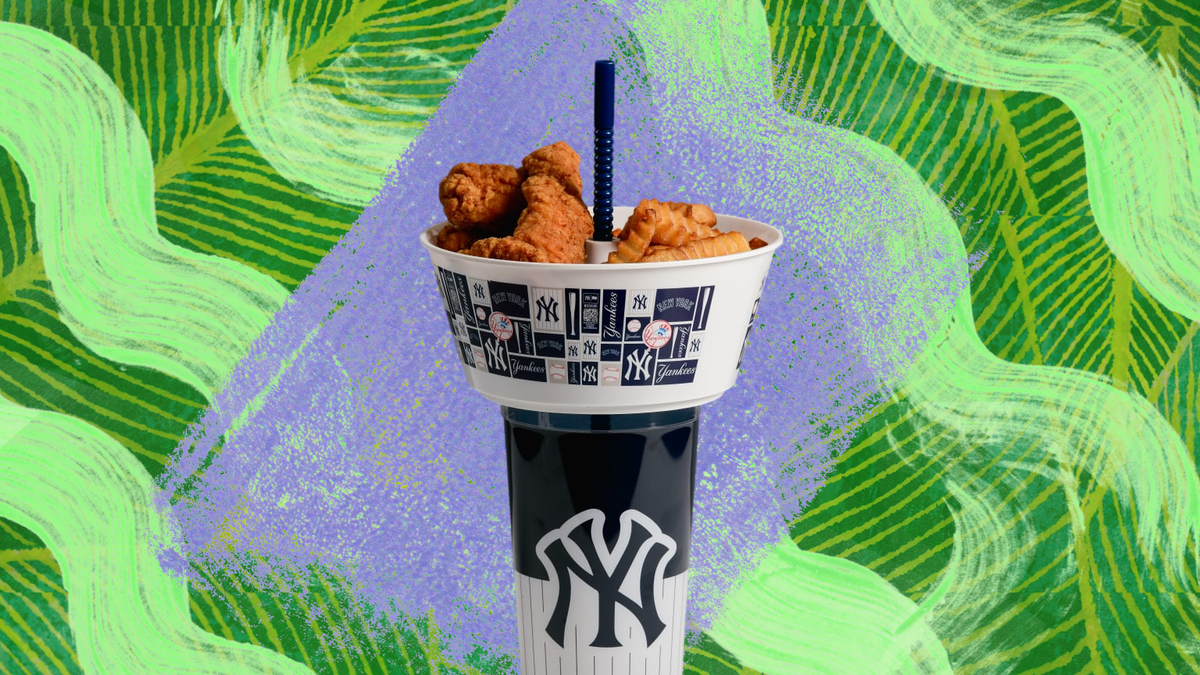
Bird Droppings
A big thanks to Taste for shouting out Jaya's piece on pay-what-you-can meals at HAGS in its newsletter this week. You should subscribe!
This week’s recession indicator is in a report from Bloomberg that bars are prioritizing having $12 cocktails again, because those $20+ drinks apparently aren’t flying out the door like they used to.
Dates are having a moment, says the Guardian, and it’s being framed as consumers searching for healthy alternatives. I personally think it’s because some mass chocolate makers have turned their candy into something grotesque that maybe isn’t chocolate.
Civil Eats published a compelling and upsetting story on a setback for California’s clean energy goals following the explosion of a battery storage center in the heart of the state’s farmlands in 2025, impacting four counties. Now, farmers are worried about air and soil contamination from possible future incidents and pushing back on having them built near valuable farmland.
The state of politics and taco discourse in Texas reached eye-rollingly stupid levels this week as the New York Times reports on James Talarico ordering a potato, egg, and cheese taco while Republicans make jokes about vegetarians. I’m so ready for this paper to just stop writing about tacos.
Raven Nickname of the Week
Want to be in this space? You have to become a Regular. Do you want to know the raven's real name? Only Big Spenders have access to that truth.
This week’s nickname was submitted by Frankie, a Regular with a super cute suggestion. “Chichichi, which is what we say in Mandarin when you're out for a big group meal or hosting a meal at home, and you want people to ‘eat eat eat,’ hurry up and tuck in before the food gets cold and before folks get too hungry.”


