

Near the beginning of June, Dallas — no, all of Texas — lost a restaurant that was singular among its peers. The story of why Restaurant Beatrice closed is one of those cruel twists of fate that the universe can sometimes deal us, and for me, it is the end of the life cycle of the first restaurant I championed as a food writer, from opening to closing. For me, it has been a frustrating journey.
While I was in the process of interviewing for a job as the editor of Eater Dallas in the spring of 2022, I was freelancing for the site and got an assignment to write about a new Dallas restaurant. I didn’t know the owners, because I didn’t know anyone. I’d built my career in music writing for the past 15 years, but I was brand new to food writing. That assignment was my first time writing an opening profile of a restaurant. I was given about 600 words to sum the place up. I’d end up writing thousands more words about it between that April and when the restaurant closed in June 2026.
Restaurant Beatrice was a Cajun and Creole restaurant from chef Michelle Carpenter, who’d run Zen Sushi in the Bishop Arts since 2007. Carpenter honored the Japanese side of her heritage for decades, studying to become an itamae between stints in San Diego and San Antonio, before making a name for herself at places like the legendary Mr. Sushi and Yamaguchi in Dallas, as executive chef at the latter. Before that, she. She was known for mixing Southwestern flavors, like jalapeño and citrus, with sushi before it was a trend. Her bonafides among sushi lovers were cemented.
Restaurant Beatrice was built to speak to the other side of her heritage. While Carpenter’s mother was Japanese, her father was a U.S. military guy from Louisiana, where her family owned a ranch and raised pigs. She learned from her grandmother, Beatrice, how to can, preserve, and cook Cajun foods. And her wife, Hanh Ho, was a co-owner — the person pushing to “do things right.” In our first conversation, the two of them shared so much about sustainability and community initiatives at the restaurant. “We’re collectively starting this entire restaurant with a new kind of consciousness,” Carpenter told me at the time. Executive chef Terance Jenkins opened the restaurant, working with Carpenter to create a menu that reflected her family’s food history and also his own as a chef at Commander’s Palace in New Orleans, making Creole food. It started out working with a community farm in South Dallas that focused on job training and restorative justice for locals. There were too many plans to put into the story, so six months later, I returned to follow-up.
That story found me touring the hydroponic farms at Fair Park, which grew lettuce, herbs, and more for the restaurant’s fall menu. And to the news that Beatrice was working towards a B-Corp certification, with the ambition of becoming the first restaurant in Texas to get one. After that story, the restaurant landed a nomination for Best New Restaurant at the 2023 James Beard Awards. They earned their B-Corp certification too, a few years later, in 2024. Writing that story also started a long and ongoing conversation with Carpenter and Ho that would shape how I think about sustainability programs in hospitality. The two shared with me, and as they started the Women in Restaurants Leadership Program at Dallas College, the practicalities of running a sustainable restaurant with programs like a minimal waste kitchen and implementing composting for food waste. But they also introduced me to philosophies around sustainability that embrace equity and affordability. If I had a nickel for every time Ho has told me that a practice isn’t sustainable if you can’t afford to do it, I’d at least be able to pay for some carbon offsets (just kidding, we aren’t doing those anymore, and they’re way too close to greenwashing).
Later, the restaurant also began working with Joppy Momma Farm in Joppa, a small city south of Dallas that is both a designated food desert and a Freedman’s Town founded by emancipated enslaved people. Its owner, Kimberly High, is one of the few Black women farmers in Texas, and her farm provides food to her community and hires locals, teaching them to farm. I covered it when the restaurant collaborated with a local seafood distributor to create a sustainable Gulf seafood offering that would become available to any restaurant in Texas. I learned from them about how to create and track a carbon footprint in a restaurant, even if you’re doing some guestimating because big suppliers won’t reveal the details of their supply chain — and I’m going to write more about why restaurants should be doing that for Ravenous soon.
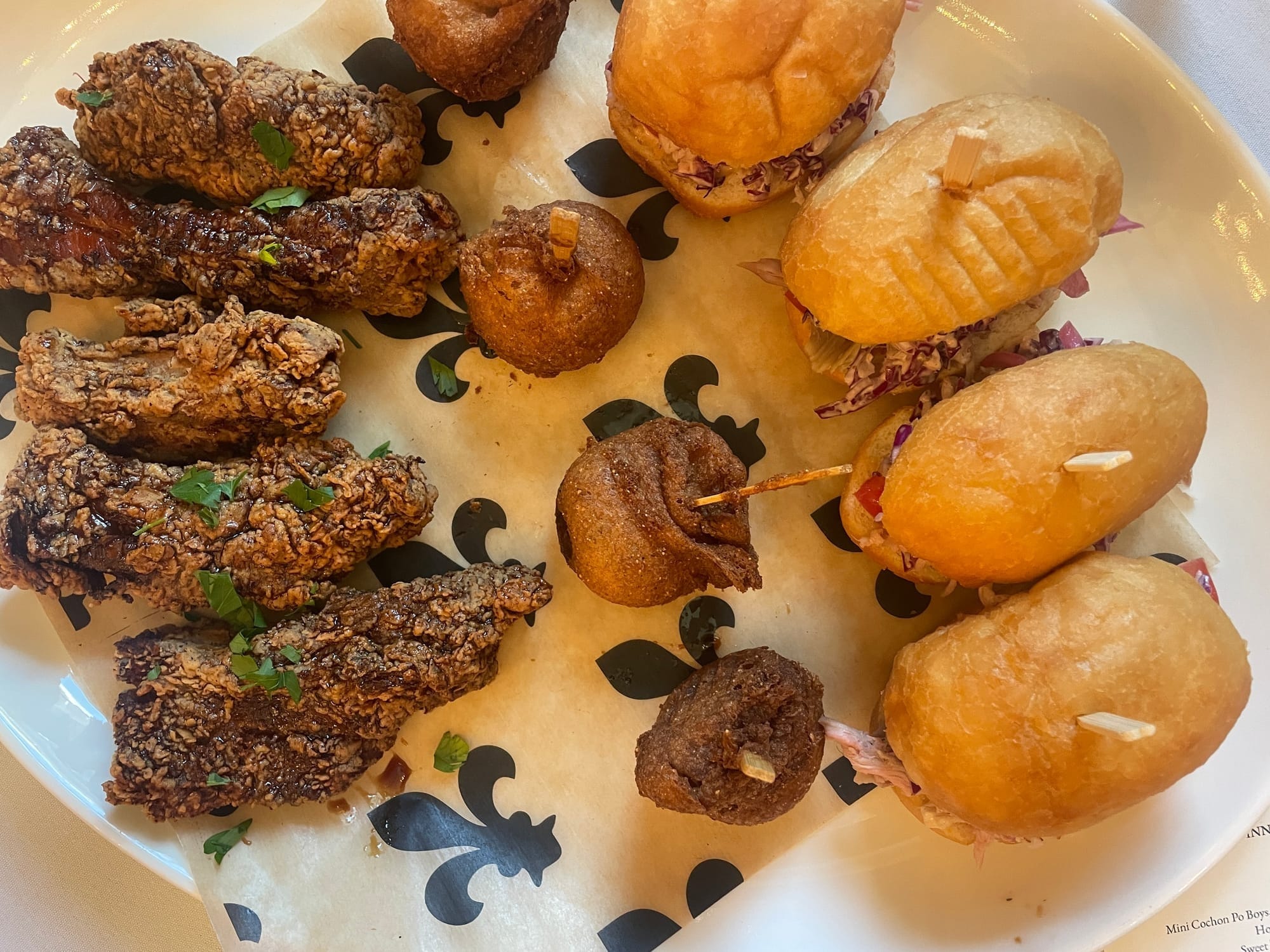
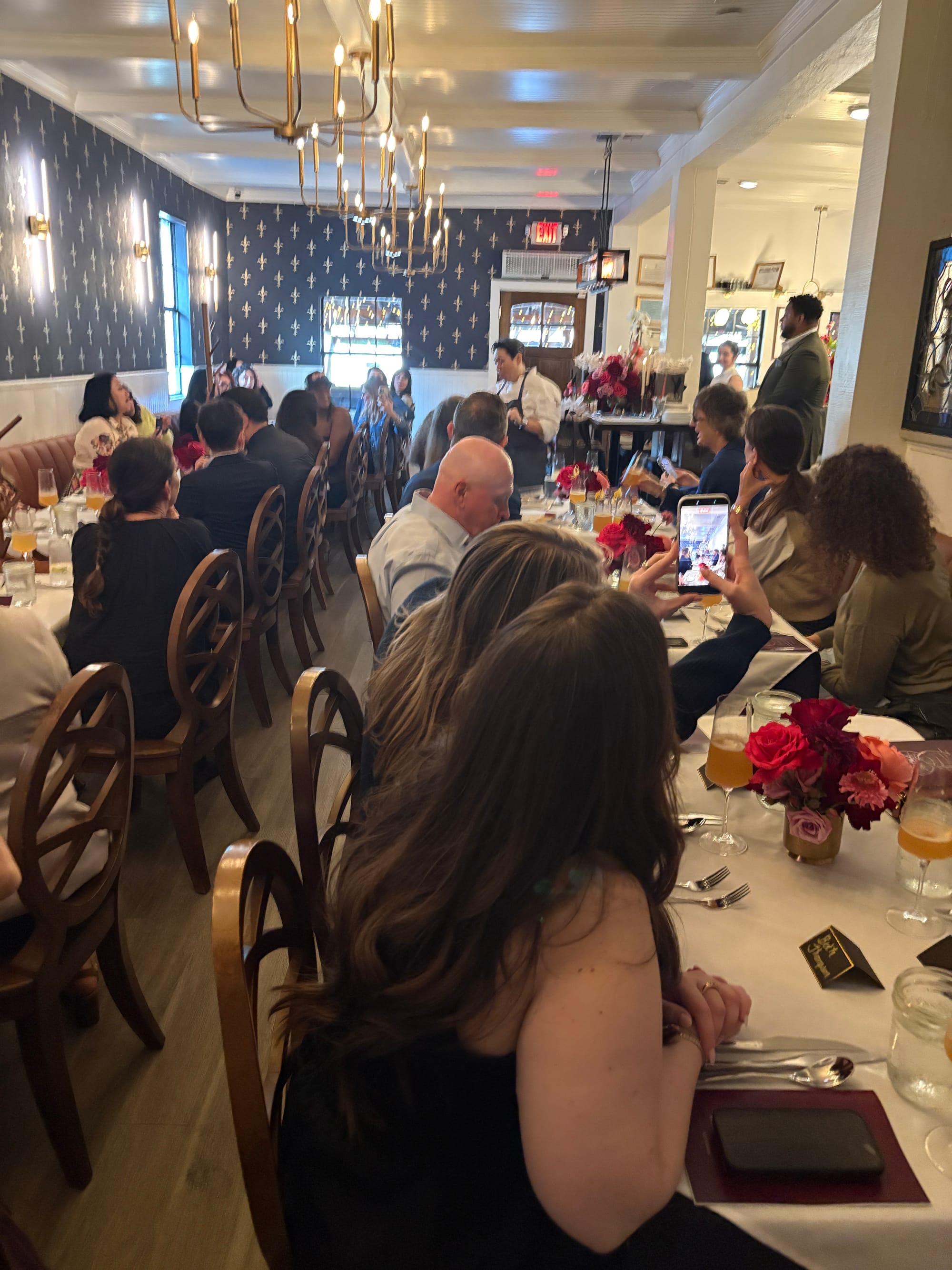
One of the things I will miss the most at Beatrice is the twice-yearly cochon de lait dinners. I made it to all but two of them, and it was fascinating to see the menu evolve year after year. Each year, Carpenter’s brother would bring one hog raised on the family farm that would be served, nose to tail, with some part of the pig served in every dish. There was always pulled pork, riblets, greens stewed in ham hocks, and some kind of custard dessert with the savory pork included. Watching the menu evolve, including when Jenkins left, and Carpenter took over curation of the meal, was so fun. Carpenter would talk to me about how she decided to challenge herself with some new element, like changing how the tea brine on the riblets was developed, or how she decided that this or that change was needed.
Perhaps the most important thing that the owners of Beatrice did was talk openly about the challenges of being triple minority business owners. Carpenter is Japanese while Ho is Vietnamese, both are women, and they are queer. There are so many levels of respect in the world of hospitality that were not extended to them because they’re women, and because we live in Texas, where even blue cities are more sexist, racist, and heterosexual than they need to be. I saw them disrespected many times, and heard them dismissed behind their backs. They started an annual Women’s History dinner to honor the culinary giants who influenced them, something that frankly doesn’t come up a lot in Dallas unless a male chef mentions his grandmother. They also started a Viet-Cajun Lunar New Year dinner, the first in Dallas proper. This fusion is wildly popular in Houston, but hasn’t taken off in Dallas in quite the same way. It was exciting to see that someone did notice and thought there are communities here who’d like to experience that food too.
In any other place, I think the owners of Beatrice would have been roundly celebrated by their community for all the groundbreaking things they did. In Dallas, it often felt like stories about innovative programs they launched were met with a shrug. I didn’t see chefs on the same level as them, or frankly, below their level, champing at the bit to collaborate with them, or even eat at their restaurant. But learning about what they were doing and why they were doing it changed the kinds of questions I asked chefs. If anyone touts their relationships with local farmers and ranchers, I ask them if they’ve also set up a compost exchange. Restaurants that tell me they have whole animal use programs now get asked if they’re tracking their carbon footprint too, or have a plan to reduce it year-over-year. Have a minimal waste kitchen? I want to know if you also have LEED certification or at least energy-efficient appliances and a green electric plan.
At the end, Beatrice was struggling financially, like all independent restaurants are right now. But that’s not what prompted the decision to close. Carpenter was diagnosed with a brain tumor in fall 2025. The couple knew that surgery was coming, and it happened around six months later. It wasn’t until she began recovery that they made the decision to close. Talking to both of them about it, it simply became clear that running a restaurant with a seasonal menu, and all the changes that are required in a place like Texas with micro-seasons, built around her heritage and story, was impossible while she was able to give so little energy and attention to it. All of Carpenter’s strength and effort has to go to healing after brain surgery. Keeping Beatrice going became a non-starter for reasons entirely out of her control.
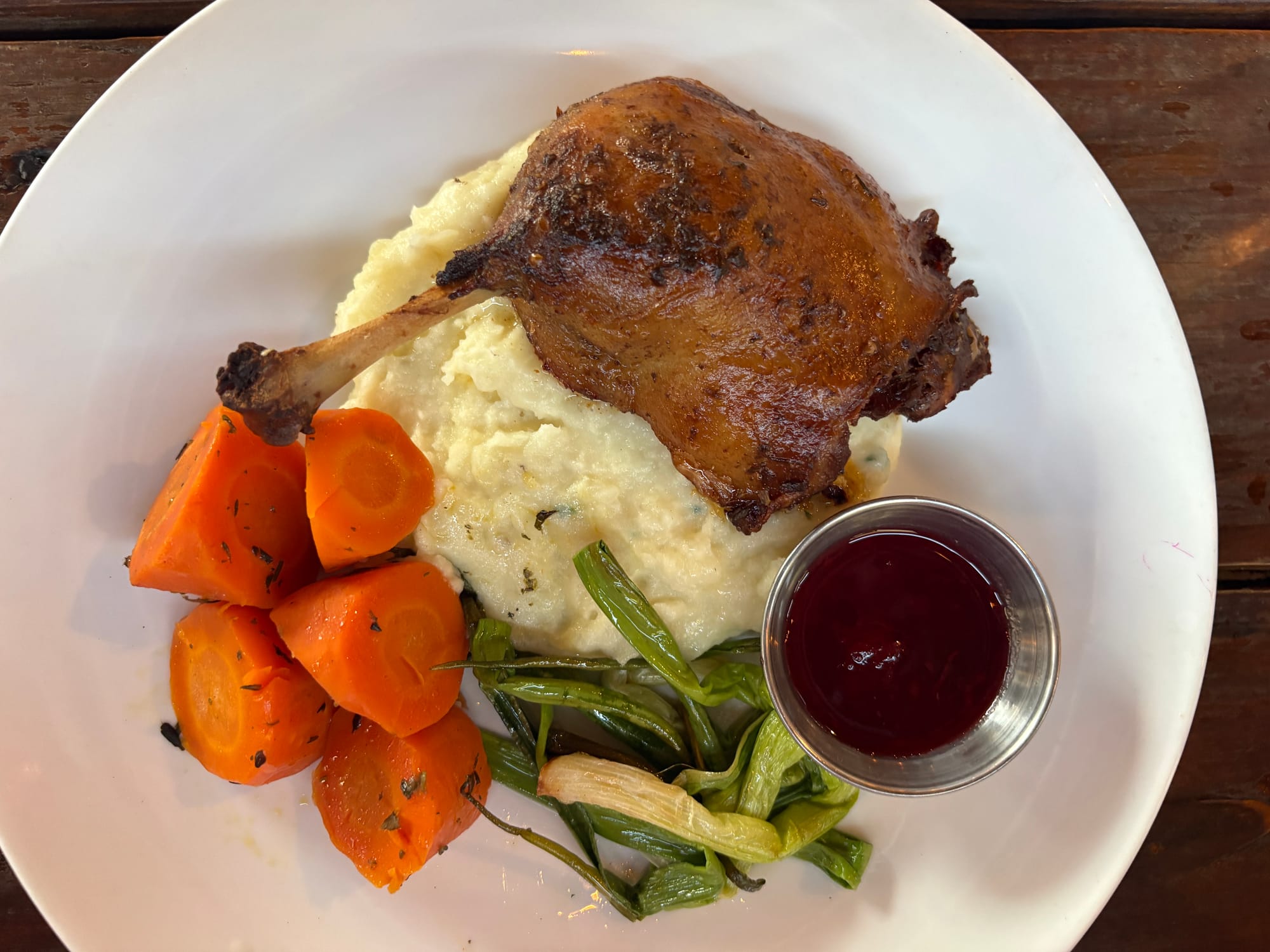
I knew the news was coming for maybe a month before it happened. So, I went for my own private last meal on the patio in the spring, on a cool night. I got the bread basket one last time, with freshly made blueberry jam. We ordered vegan Viet-Cajun eggrolls for my pescatarian-but-mostly-vegetarian boyfriend. I had a duck dish Carpenter put on for the season, served on a soft bed of mashed potatoes with vibrant spring vegetables. Ho sent out the surf and turf because she wanted me to try it. I think I ate every dessert on the menu and said my private goodbye.

Ravenous is a worker-owned publication powered by subscriptions and donations. If you like what you read, leave us a tip!


