

“Your Weekly Slice of Sister Pie” reads like a baker's diary. Lisa Ludwinski, owner of Detroit's James Beard-nominated bakery Sister Pie, started the Substack in June 2025, six weeks after the bakery announced its storefront would temporarily close due to economic struggles. In her newsletters, alongside an asparagus-potato galette recipe and a cookie made from leftover dough scraps, Ludwinski shows vulnerability in detailing missed monthly revenue goals and how Sister Pie sold pantry ingredients and offered new baking classes as ways to navigate what she described as “transitional times.”
She is one of the 35 million active users on Substack, the newsletter platform started in 2017 that pounced on the media industry by shifting away from unreliable ad revenue and capitalizing on social media and SEO in favor of a subscription model, which depends on building a loyal audience willing to pay for content. It also launched a program to pay writers it felt were "good bets" in 2021, extending large advances to create a publication on the platform. While Substack may have started with the same blogging spirit of the days of LiveJournal and Xanga, nowadays, Substack has a sense of competition with leaderboards ranking the top best-selling creators in various subjects. And Substack isn't without controversy. The platform is known for lax content moderation policies that have allowed for harmful speech, including anti-trans, Nazi, and white supremacist rhetoric. While some have left Substack for other platforms like Beehiiv or Ghost, many writers, including those in the food world, have stayed over concerns that their captive audience may not follow them outside the Substack network.
In the top 100 of the Food and Drink leaderboard, there are numerous recipe developers (including well-respected names like Yotam Ottolenghi and Carla Lalli Music), celebrity chefs (José Andrés and Andrew Zimmern), and food and dining writers (Ruth Reichl, Mark Bittman, and Robert Sietsema, a friend of Ravenous). And now restaurants, bakeries, and other food businesses are hopping on the bandwagon.
In his Substack newsletter, called “A Chef At Last,” which launched in September 2023, chef Eric Huang reflects on his shortcomings and challenges he faced while running his now-closed Brooklyn restaurant, Pecking House. In a 4,700-word post, he writes about his lack of experience with fundraising, opening a restaurant, navigating city bureaucracy, and negotiating contracts. He also argues that building a sustainable and successful restaurant in New York is often tied to the privilege of wealth.
Chefs are increasingly interested in dismantling the fantasy of restaurant ownership by sharing its emotional and financial realities in the form of first-person, long-form newsletters. Ludwinski sees value in that transparency. "If I were a person thinking of starting the bakery business, you only see the romanticism of it and not see the internal struggles that could happen. And I think that's helpful for people," she says. Writing allows Ludwinski and other food business owners to share unfiltered stories about the wins and struggles of running a restaurant. The newsletters almost read like journals, filled with worries and reflections that offer readers an inside look into the chefs’ thoughts for the first time.
"If I were a person thinking of starting the bakery business, you only see the romanticism of it and not see the internal struggles that could happen. And I think that's helpful for people."
— Lisa Ludwinski, owner of Sister Pie
Even chef Grant Achatz, the decorated chef of Alinea in Chicago, has jumped on the platform, announcing a reinvention of the 20-year-old restaurant in April. Since then, he's written thousands of words about the inspiration behind new dishes, drawing on medieval history, color palettes, sketches, and the testing process. Alinea hasn’t traditionally spent money on PR, but as the restaurant fell from three-Michelin Stars to two in 2025, they’re now leaning on Achatz’s eccentric writing, which gives his peers, would-be guests, and loyal customers a window into his fantastical mind. Oftentimes, restaurant storytelling has been filtered through publicists, press releases, or interviews about a dish or an exciting new pop-up.
At Ravenous, we're building the future of food media, and we need your help. If you're enjoying this trend report, consider dropping a few bucks into our tip jar to help us keep doing this work.

Shortly after Instagram launched in 2010, it became the primary way for restaurants to communicate with their customers. However, the platform has shifted from showing posts from followers to algorithmically serving content based on interests. In short, Instagram users are seeing less content from the people they follow. For many restaurants and other food businesses, this has weakened their connection with their online communities.
Ludwinski agrees that the algorithm changes have affected Sister Pie's ability to reach its fans on Instagram. But she also theorizes that social-political messages that they’ve shared, which have garnered negative comments, may also have penalized the account in the eyes of the algorithm. In January, Sister Pie shared an Instagram post that they would not be working in solidarity with the nationwide protests against ICE. The post inspired over 2,300 likes and 200 comments, ranging from praise for the bakery’s actions to challenging the business’s decision to participate to outright xenophobia.
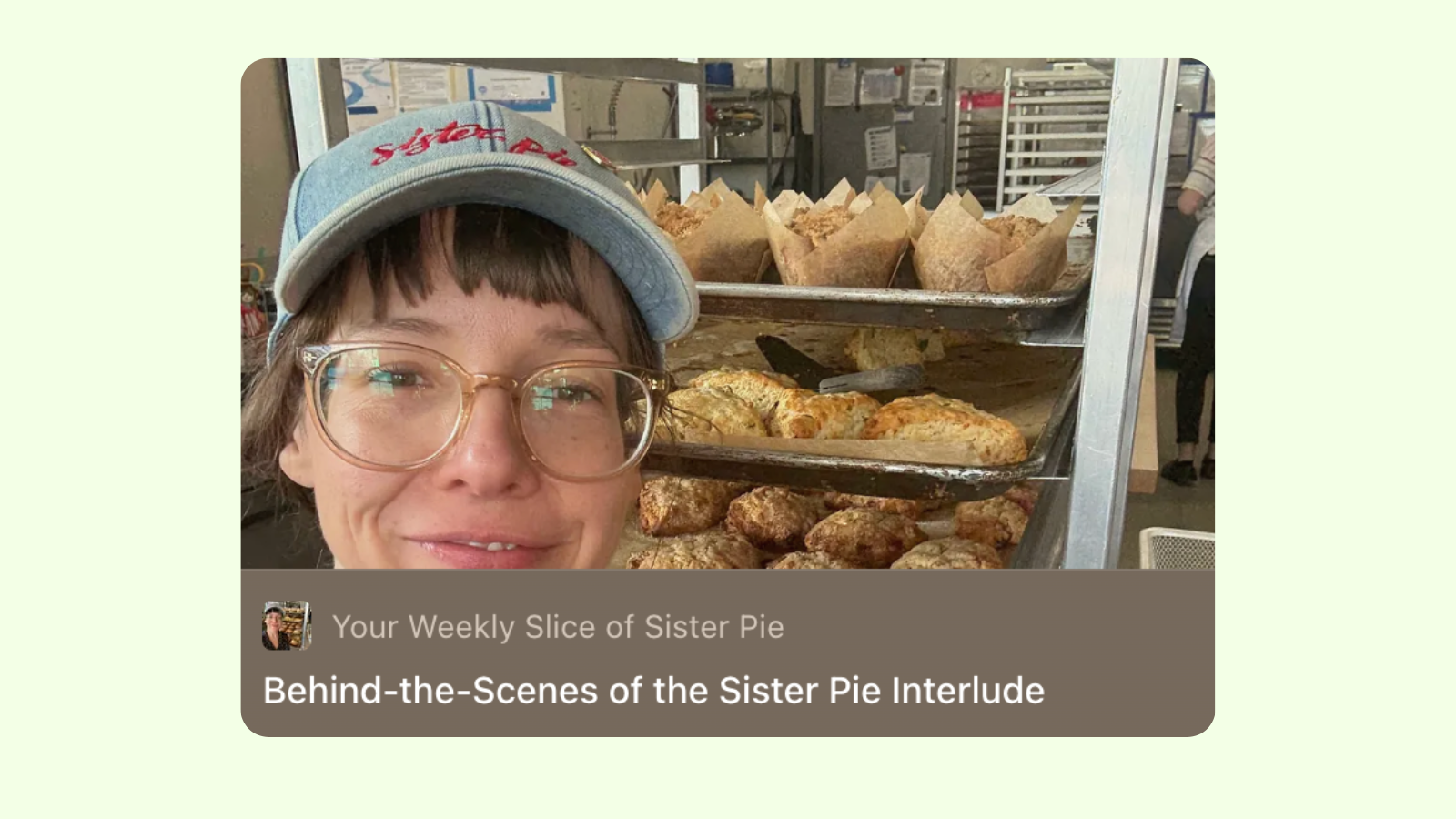
Unlike Instagram’s feed, readers must opt in to receive newsletters from Substack and other platforms like Beehiiv. Ludwinski was first pitched the idea to start a newsletter by her former baker, Kaitlynn Wiegand, who described it as an avenue to reach audiences outside of social media through recipes and connecting with the bakery’s fans on a deeper level.
Through the long-form medium, she can share the ingredients, directions, and tips that could not be conveyed in a quick Instagram post. The Substack platform has commenting features that she uses to ask for feedback on recipes and the type of content her audience would like to see. While most posts receive only one or two comments, those responses are often far more thoughtful than interactions that would appear on social media. For instance, in a recipe for the labor-intensive Neopolitan Pie, a commenter reported how she built the pie over the course of a Friday evening through Saturday afternoon and kept each layer sharp. She also called out the recipe's dehydrated strawberry hack as a substitute for ruby chocolate as something she’d like to try in the future. Beyond online interactions, customers visit during the bakery’s limited storefront hours to talk about the state of the business with Ludwinski after reading the newsletter.
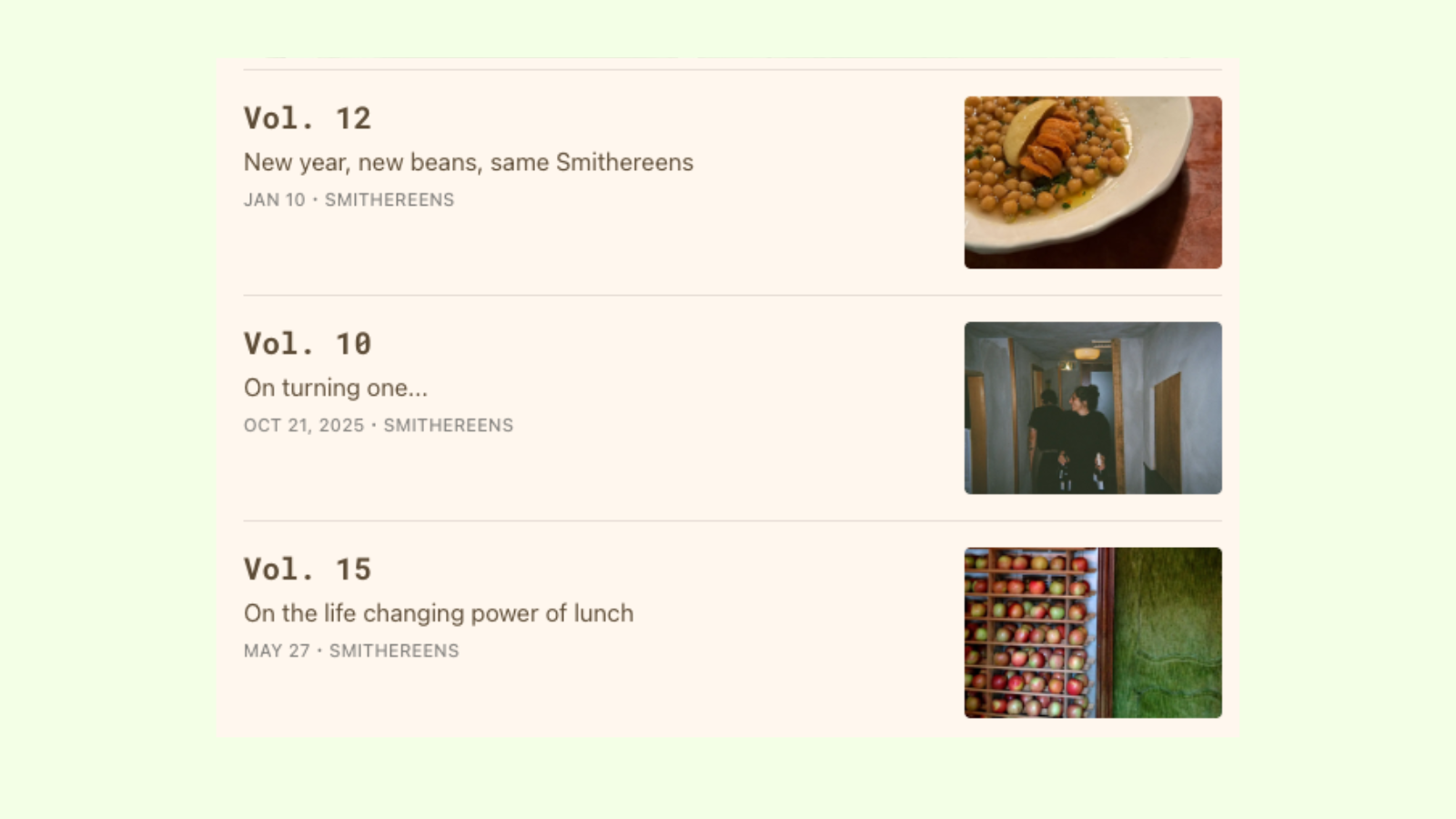
Nikita Malhotra, sommelier and owner of Smithereens, a New England-inspired seafood restaurant in New York, has noticed customers bringing up the restaurant’s Substack, "Smithereens Zine," where she writes her wine column titled “No Spitting.” “There are regulars that come in after reading about the changes in the beverage program,” said Malhotra in an interview with Expedite. “I love being able to provide more texture in terms of the direction of the wine program and it’s rewarding to experience those interactions.”
"Smithereens Zine" features stories from the staff, from waiters to bartenders, on what they're reading, listening to, or eating, or thinking about — like how Lunchables was a status symbol in the school lunchroom. It highlights how the artistic abilities of the staff lie not only in good food, but throughout the entire workplace experience. It also makes it seem like a fun place to work. Who wouldn’t like to hang out with a waiting staff who could talk about both ingredient sourcing and the nostalgia of Lunchables? Each issue reads exceedingly like a food and culture magazine. Tamburo details the history behind his playlist, one littered with Japanese City Pop. Another entry shares Malhotra’s memories of chardonnay reappearing throughout her culinary career at New York powerhouses like Tribeca Grill, Bâtard, and even extending to her teen years spent working at her parents' wine store. “The story of Chardonnay is epic and diverse,” Malhotra writes. “This is a grape that makes some of the most expensive wines in the world (Montrachet) and some of the most affordable (think Two Buck Chuck or Yellow Tail).”
In the age of AI, showing workers as humans, not robots, has become a trending value proposition for all brands, not just restaurants. By taking customers behind the scenes, restaurant owners show their staff’s creativity and heart. The platform also offers space for transparency. With the rising cost of ingredients, even a few-cent increase can enrage customers. By breaking down the ingredients and being transparent about prices and what labor goes into it, food businesses are building value in the dining experience. Often, food marketing is centered around reminding customers that the food is worth the price for that special care and human touch.
For Sister Pie, the newsletter doesn't bring in a ton of money, representing 6% of the bakery's revenue. But for Ludwinski, the Substack puts her in a good position to grow an audience that would buy a potential second cookbook. It's been seven years since her first cookbook was published. Building an audience for a book venture was not her intention, though — her personal goals for the Substack are to build her recipe-writing skills and shift her mindset back to being a writer.
Chef Huang revealed that he’s been working on a memoir that’s set to debut in the fall of 2027 in a recent Substack. Since the announcement, he’s increased his posting cadence to two posts in two months, which could signal that he’s preparing to grow and build his audience to help market the book when it becomes available for pre-orders.
While Substack doesn’t look like traditional email marketing or a press release, ultimately, it is still a marketing tool. The goals are still the same: bring diners to the restaurant or bakery and create value for the food by showcasing the voices of the chef, kitchen, and front-of-house staff. A fun weekly or monthly newsletter in your inbox from your favorite restaurant feels like a casual, friendly reminder to make a reservation and come visit again soon. It’s still difficult to measure how many Substack readers convert to actual diners and dollars. For right now, restaurants are still in the experimental phase, testing various types of content and watching to see what sticks.
What seems to be resonating are the newsletters that open up about personal stories or struggles about running a food business, which make customers feel like they are a part of the restaurant community and ecosystem, not just patrons. When customers hear of hardships from restaurants, it's often already too late, but through these newsletters, the community feels like they're part of the business, that these owners are not all like Carmy in The Bear, the kind of chef that just needs to have a meltdown to bring about a stroke of genius or luck.


