

I would never dare tell anyone who cooked for me that I didn’t like their food. Growing up in a Filipino household had taught me that food = love. Instead of asking, “How are you?,” my parents would ask me, “Have you eaten?” In my family, it was our way of connecting across generational and cultural differences, so I always finished my plate even when the meal wasn’t my cup of tea.
Dinner time was a sacred time for my family. During the weekdays, my parents worked long hours, getting up early before I’d wake to commute into New York City and come home in the evening around 7:45 p.m. Most days I wouldn’t see them until dinner time. When I’d hear my mom's keys jingle at the door and my dad’s car pulling up into the driveway, my siblings and I would flock to the table. My nanny, who was more like a second mother to us, cooked our family’s meals, which included a weekly rotation of pork or chicken adobo, salmon sinigang, and bistek. We’d scoop mountains of rice and protein onto our plates and talk about what we did at school. At an early age, I connected food with being together with loved ones.
There was also the immigrant guilt of wasting food. As many kids of immigrant parents know, not finishing your plate was almost blasphemous. My parents would bring up how people in their home country often didn’t have any food, and I should be grateful to have a full plate. There's even a Filipino superstition that the rice you’ve left behind on your plate will be waiting for you in the afterlife, where you’ll be forced to pick up every single grain one by one. That imagery haunted me as a kid, so during most meals, my plate would be completely cleaned off. And as I grew up, it became a habit that was hard to break.
As a child, I have a memory of going over to my friend’s house and slurping up a milky rice dish that her mom was so proud to share with me. It felt special, and I could not bring myself to tell them that I was lactose intolerant. I’d gobble up anything if you told me it was a special recipe that your great grandma developed with rations during a world war, even if it would make me ill. I’m embarrassed to say that in adulthood I still have a hard time setting these boundaries. Even as recently as Easter, my father-in-law's girlfriend brought over Krupnik, a Polish brand of eggnog cream vodka, which I knew would not agree with my body. She told me stories about growing up in Poland, and about how she brought several Krupnik bottles back to the states, including this one, to enjoy on special occasions. I sipped and smiled through the bubbling in my stomach.
I've been thinking a lot deeper about what makes a food taste good since becoming a parent. While I'm a people pleaser, my twin 3-year-old boys are the exact opposite. I've seen a strawberry thrown across the room at the mere sight of it on the plate. I’ve seen quesadillas remain uneaten because the crust was not crispy enough. Most parents go through a picky eating stage, and as someone who loves food, it's so important that I expand my kids' tastes. My kids may be able to live off of peanut butter and jelly, but I can’t.
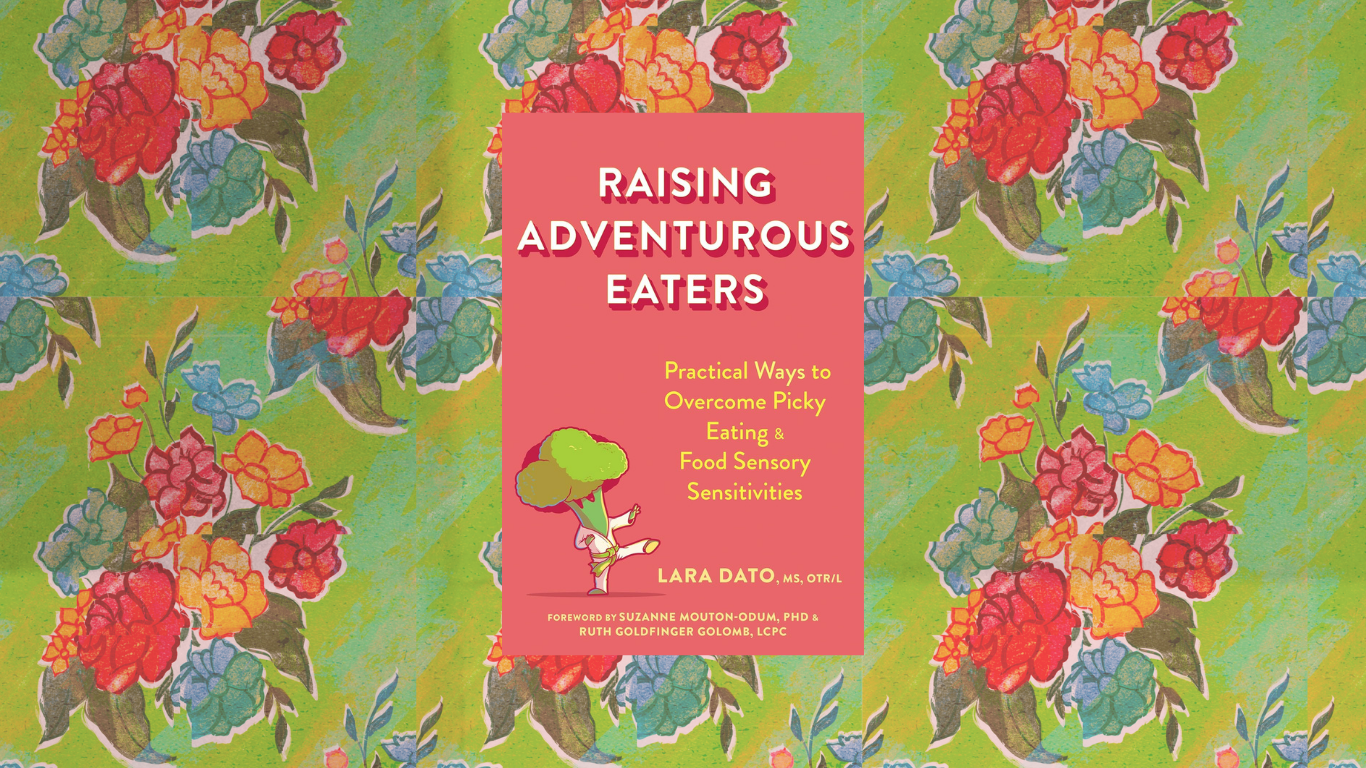
That's when I picked up Raising Adventurous Eaters by Lara Dato, a pediatric occupational therapist who wrote this guidebook for parents dealing with kids who have picky eating habits due to sensory sensitivities. The book starts with the revelation that the act of eating — putting something in our mouths, and then ripping, chewing, crunching — is actually something that needs to be learned. Eating requires not just taste but several senses. “Biting into a new food bombards our senses with information,” Dato writes. “Our bodies simultaneously smell, taste, feel, and see our food while hearing our bites crunching."
In the first chapter, she tells parents to list out their child's top ten favorite foods and find any patterns by evaluating each of the senses that come up when eating. I noticed my kids liked beige-colored food (pancakes, bread, tortillas, chicken nuggets), which often signals a weaker flavor, unlike red foods (strawberries or peppers) that can signal a more intense flavor. They like mushier foods like sweet potatoes and Larabars that are soft and consistent throughout — there’s no unexpected crunch that could be startling.
The chart revealed a lot about my kids' eating profile, so I thought I’d fill it out for myself too. (She also has a printable worksheet that can be filled out for anyone wanting to evaluate their own preferences). Unlike my kids, I love bright-colored foods (crispy broccoli, Sriracha, seafood), which indicate strong tastes like earthy, spicy, briny, and fishy. I also preferred crunchy textures (empanadas and potato chips), but also slimier foods (oysters, shrimp shumai, runny eggs). I also noticed my preferences towards savory, bite-sized morsels. Pizza bagels, pigs in a blanket, mini dumplings, mini empanadas — if it can be eaten whole in one bite, I'm sold. Anything I have to cut like a steak or use a fork to gather together like spaghetti or salad, I’m not the biggest fan. Yes, I realize that makes me sound like a baby that needs my food cut up so it’s easier to chew, but there's something about having one bite with all the flavors bursting at once that is so wonderful and exciting. Often, the vehicle that carries the food (crackers, chips, mini pie crusts) has a satisfying crunch and “chomp” sound that makes me feel like a video game character gaining life points after taking an energy potion.

Now, seeing the gap between my taste versus my kids', I've made small tweaks to appease all our taste buds. If I make shrimp or salmon with a citrusy sauce for myself, I'll cut up some of it into tiny pieces and sneak it into their quesadilla. I'll also put small portions of protein on the side of their plate. Those still remain untouched but I'm hoping with enough exposure, they’ll warm up to it. I've also finely chopped up crispy broccoli, dusted it onto a pizza, and covered it with cheese. I’m still making two different meals — adult dinner and kid dinner — but at least some of the ingredients are the same.
With this list I feel better equipped in figuring out what to order at a restaurant where I’m not familiar with the cuisine. I've often heard from waiting staff that asking, "What’s good on the menu?" is often not the most helpful question to ask. Perhaps a better way to approach ordering is to describe flavors or textures in the foods you usually enjoy. I’m still appreciative of all foods, but now I have a better understanding of my likes and dislikes.
In looking at my list, I see reflections of missing living on the coast and eating seafood. When I gave birth to my kids three years ago, I moved from New Jersey to the landlocked state of Michigan. While there are whitefish in the Great Lakes and many of Michigan’s inland lakes, there’s nothing that compares to the flavor of saltwater. I also notice what’s not on the list: cheesy and creamy foods. While I frequently enjoy a creamy pasta, chips and dip, and cheesy quesadillas, those flavors are just not found in my top ten. It seems so obvious in retrospect, considering my lactose intolerance. However, I do have tres leches on the list, which is the only sweet food to crack my top ten. When looking at texture, I find I prefer spongy milky instead of creamy milky textures. This tracks since I love a soggy cereal, where the starch is completely softened by the milk.
As I have learned in my career in food, there is no such thing as "good" or "bad" food. Taste is subjective, and palates can be trained. I’ve been a “good” eater for most of my adult life. No tentacle, bug, or fetus egg scares me. But now, when someone asks me “What do you like to eat?”, I feel better prepared to answer that.
As for my kids, it's going to be a lifelong journey for them to become the adventurous eaters I'd want them to be. Step one for now is to give them a vocabulary for the food they like, which tends to be sweet, nutty, and soft. I've also introduced dipping their chicken nuggets into barbeque sauce that leans more smoky and peppery, which has had varying success. Sometimes it's literally finger-licking good, other times it's "too spicy." In the meantime, I'll douse my nugs in Sriracha.


.jpg)

