

Can you bank sleep? Nope. But that hasn't stopped me from trying as James Beard Award weekend has hit Chicago — the gala is on Monday, June 15. This time of year has me confused. I want to be welcoming to the visiting media and restaurant folks in town to celebrate. But I'm also a Chicagoan, and like every citizen of a major metropolitan city, we have a love-hate relationship with tourists. We love the money you spend, but we have a low tolerance for your need to make us wait in line to get deep-dish pizza or see the top of the Willis Tower. Don't get me started on Lollapalooza and crowded CTA trains.
But not all tourists are created equal, and by the time you read this, I will have assembled with my four Ravenous founder-owners for the very first time in the same room. I need to bring my A-Game and stow my disdain for a few more days. But what if the lesson is that I really love entertaining and showing off Chicago? Stack up the Malört shots, and let's go! Yes, one of my colleagues hates how so many chefs like to use "let's go!" on social media. Yes, I'm trolling my colleague for her very valid point.
In this week's newsletter, I dive into the value of street food vendors, and how the city of Chicago is bent on killing something so vibrant to the fabric of cities all over the world. You'll also never guess who's happy about Noma's comeback. Meanwhile, Frances takes a look at how restaurants use Substacks, while I ponder the outrage if Chicago's Pope Leo spilled giardiniera on his robes.
It’s been a year since the crowd at the 2025 James Beard Awards heard the final two words of Chicago’s chef Noah Sandoval’s Best Chef: Great Lakes award-acceptance speech.
“Fuck ICE” became a motto for many disgusted by the immigration raids that swept through America, including Chicago, Minneapolis, LA, and Seattle. On Monday, June 15, America’s dining elite will again assemble at the Lyric Opera of Chicago for the latest edition of the Beards. The founders at Ravenous have decided to pay the city a visit as we mark our launch and map out our scrappy worker-owner futures.
It’s the gala’s 11th year in Chicago, and I’ve been inside the building for all of them, from when Jeremy Allen White floated throughout the opera house in relative anonymity before The Bear premiered in 2022, to hearing Jesse Tyler Ferguson’s creative pronunciation of Chicago icon Tony Mantuano’s name. Virtue’s Erick Williams broke barriers in 2022 as the first Black chef to win Best Chef: Great Lakes. The following year, Kasama’s Tim Flores and Genie Kwon sported matching vaquero gear procured from Alcala’s Western Wear.
At the 2026 Beard Awards, the gala will deliver dozens more moments for restaurant workers across the country. Some will thank their families while on stage, accepting their medallions. Others may use their time to make a political statement, as Sandoval did last year, even though he didn't attend the gala (a close friend delivered the Oriole chef’s remarks on his behalf). ICE and the Israeli-Palestinian conflict were two major themes mentioned during 2025's ceremonies.
But one year later, the struggle continues for immigrants in the hospitality industry. The Tribune reported a rise in arrests of street vendors by Chicago police who are, once again, sweeping them out of downtown. There are stories of police confiscating food carts and leaving families without a source of income. The story was triggered by a viral video posted on May 22 of police removing food carts from downtown. It’s not hard to connect the increased police activity with last year’s ICE raids, as the Trib mentions the influx from Texas Gov. Greg Abbott’s $148 million plan of busing migrants to sanctuary cities like Chicago. Police simply told the Tribune it “enforces all laws, including laws related to peddling and unlicensed vendors.”
In many cities, street carts provide a cultural gateway for tourists, affordable dining options for locals, and a way that small entrepreneurs can provide for their families without an abundance of capital. Last month, I spoke with Kavi Thakrar, one of the founders of Dishoom, the mini-chain of Indian restaurants started 16 years ago in London. Dishoom will open a New York location in 2027, bringing the chain’s trademark versions of Indian street food to the United States. Thakrar tells me they’re considering an homage to New York’s BEC (bacon, egg, and cheese sandwich) sold at bodegas across the boroughs. Dishoom already serves a bacon naan roll in London with a similar profile.
When visiting India, Thakrar will visit street vendors for inspiration. He has rules to stay healthy. 1. Make sure the food is hot and cooked for you. 2. Avoid condiments, like chutneys, made with cold water; don’t eat anything with ice. 3. If you eat fruit, eat fruit that you peel yourself. “Those are my rules; just hot food cooked in front of you that you know is hot so that the baddies have been killed,” Thakrar says.
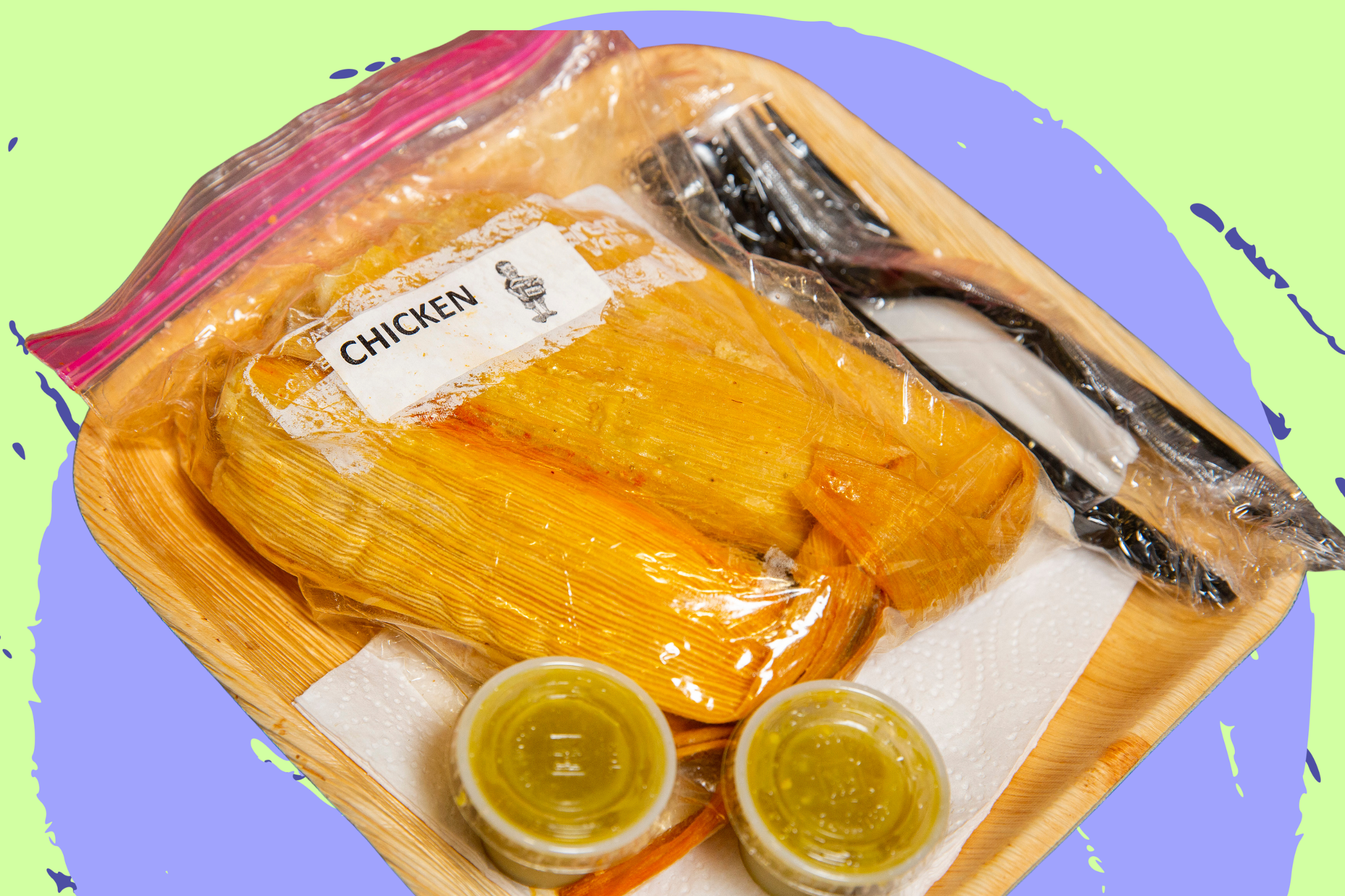
A traveler needs to take care when eating food in any foreign country, but there has been ample racism directed at Indian street food for travel influencers and tourists. You don’t need a passport to find similar bigotry in Chicago. The federal government’s Operation Midway Blitz, which started in September and wrapped up when a group of Border Patrol agents, including Trump’s border chief Gregory Bovino, posed in front of the Bean for some bizarre loser yearbook photos during the wee hours on an early morning in November. ICE targeted predominantly Mexican neighborhoods like Little Village and Pilsen, creating a heightened sense of fear for locals. A chilling example comes from Thai Dang, the Beard-nominated chef behind HaiSous, a lauded Vietnamese restaurant in Pilsen, who would invite a street vendor to be stationed in front of his restaurant, and inside during the winter months for shelter from the cold and snow. Dang says he hasn’t seen the vendor — who sold elotes, tamales, and cut fruit seasoned with Taijin — in about a year.
These actions strip “something very delightful about going into those neighborhoods,” says Linda Xóchitl Tortelero, the CEO of the Latino Policy Forum, a Chicago-based non-profit advocacy group. Tortelero, who is Mexican American, mentions the joys of venturing inside a Mexican restaurant, butcher, grocery store, or bakery in Little Village. (Disclosure: Tortelero is an old friend from high school.) She has traveled to Thailand, Vietnam, Cambodia, and visited South Africa in 2010 for the FIFA World Cup. “We've all eaten street food, and we recognize that that is probably some of the best food you can get in those countries, right?” she says.
Tamale vendors are among the most vulnerable. Even cult hero Claudio Velez, Chicago’s famous Tamale Guy, was targeted in 2020 and issued a cease and desist order by city officials after a series of coordinated complaints. Tortelero shared an example of good police work when officers would protect tamale vendors. But that trust has been eroding, as local police efforts are often conflated with federal enforcement agents.
If ICE is focusing on Chicago’s neighborhoods and the police are focusing cracking down on downtown vendors, where are brown folks supposed to feel welcome? Tortelero understands the need to keep people safe, but she worries about the message the city is sending: “It's like this is not for you… downtown is not for you, and that is not acceptable in a modern society where we want to create equity,” Tortelero says.
One of the narratives that’s been built in Chicago is that vendors, including food trucks, compete against licensed restaurants, and that it’s not an even playing field. Tigist Reda, chef and owner of Chicago Ethiopian restaurant Demera, argues that the experiences are different: “They are not competing with it or against it,” Reda, who grew up in Ethiopia, says. “When I go to any new country, I want to try the restaurants, but I also want to try their street food.”
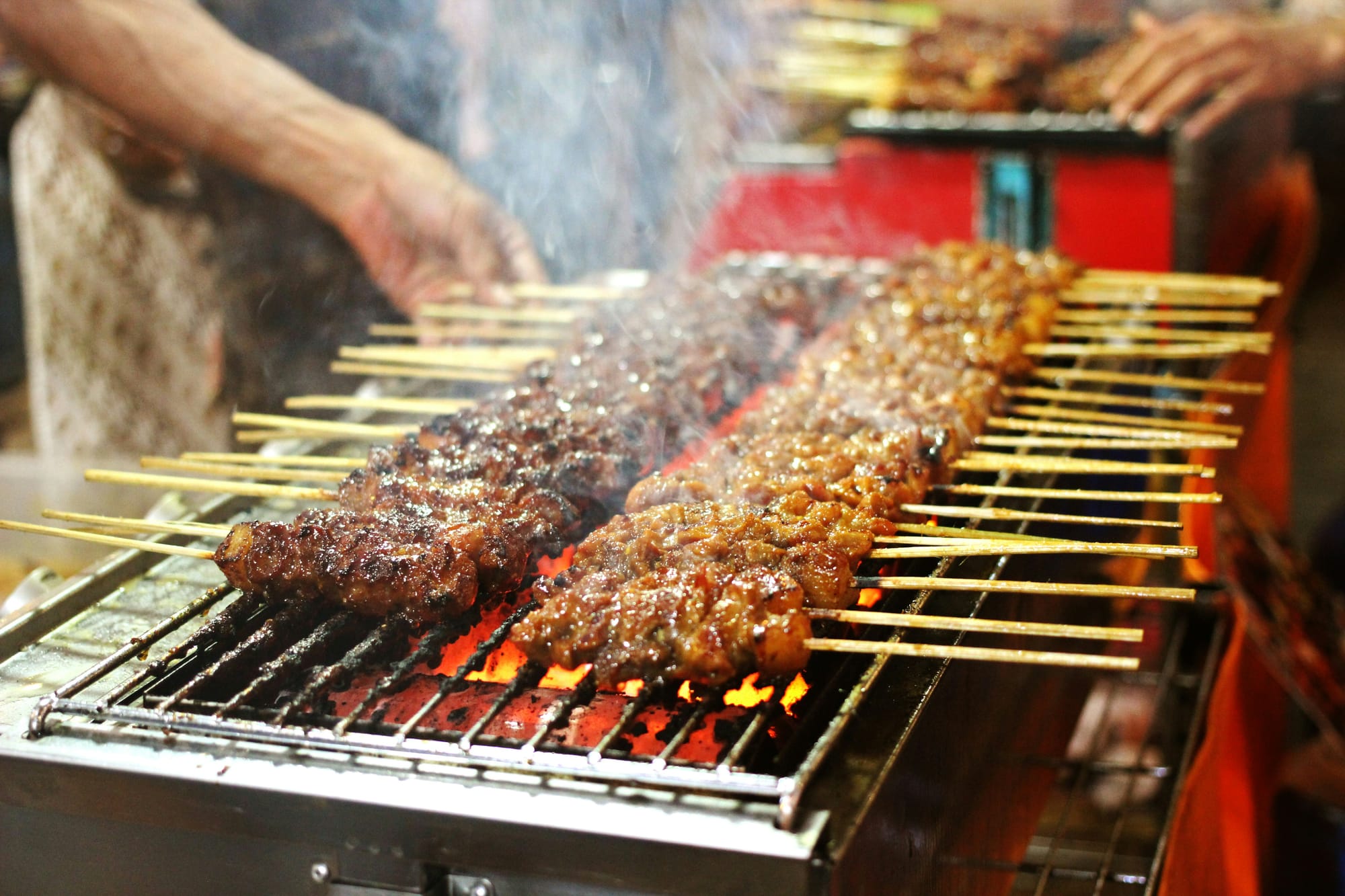
Chicago has embraced street food from immigrants, including Italian beef, and celebrates vendors at places like the Maxwell Street market, the birthplace of the namesake Polish sausage. But with the market open only six days this year, that legend has since faded. Chicago’s government has worked hard to eradicate vendors from downtown with the desire to make the city appear more cosmopolitan. Food carts, often noted as affordable to operate and selling at low prices, were only made legal in Chicago in 2015. And though folks are allowed to set up propane grills near concert venues and sporting arenas to serve event-goers, the city’s more urban food cart culture has been successfully trampled by Chicago bureaucrats. Some were just racist and didn’t want to see Black and brown faces or smell seasoned food while shoppers patronized beloved shuttered retailers like Marshall Field’s and Carson Pirre Scott in the ‘70s and ‘80s. Others don’t see the value that food carts bring to customers and business owners who live in an expensive city.
“It's the easiest path to start. It's lower overhead than a traditional restaurant,” says Michael Ciapciak, owner of Bang Bang Pies & Biscuits in Chicago. “You're gonna attract more people just by sheer driving on each side of the road.”
Bang Bang has an established customer base, and Ciapciak is aware. “We have things we can rely on, we have attorneys we can pay, we have colleagues we can refer to and direct us, and our favors we can call in, and all this stuff,” he says. “A lot of these individuals that are selling food from these carts don't, and I can't imagine how challenging it is.”
“It's like this is not for you… downtown is not for you, and that is not acceptable in a modern society where we want to create equity."
Contrast this to what’s going on in New York, where street meat and other delicacies reign. In December, the city — now led by Mayor Zohran Mamdani — lifted the cap on food cart permits and licenses. This policy will provide opportunities for many of New York’s most vulnerable at a time when the federal government is showing nothing but disdain for their existence. New York has always valued food carts and the people behind them more than Chicago. This kind of environment helped launch the Halal Guys in 1990, with the first halal food cart. Meanwhile, good luck if you want to find a Chicago-style dog on downtown’s sidewalks. At least take solace that private equity-backed Portillo’s has a thriving shop and drive-thru. I suppose Halal Guys now is flush with private equity, too, so what’s the difference?
The enshittification of bagels thanks to VC money is also hitting Chicago hard, especially in Wicker Park, a North Side neighborhood that was reshaped 25 years ago when MTV’s Real World put the area on the radars of real estate and developers. But with all this uproar about private equity, street vendors are getting lost in the shuffle. Charles Wong sees parallels with his journey. Umamicue has popped up at bars and other restaurants, serving barbecue with Vietnamese and Chinese touches since 2016. It’s been a struggle finding the right space for a permanent home for his restaurant. Part of that is the advantages private equity has over small entrepreneurs. That’s multiplied tenfold in the case of street food vendors.
“There's a health issue with that in terms of sanitation and certain rules you have to follow, and you have to obviously pay for the permits,” Wong says. “But I think at the same time, as a consumer, it's also up to you to decide whether you want to eat that or not. So if you don't think it's safe, then you shouldn't eat it, but if you want to immerse yourself and you want to try something from someone that is just trying to make a living and doing something from the heart… I choose that every time.”
Ciapciak adds that there’s a presumption that a restaurant inspected by the health department is more sanitary than a street vendor. He brings up how delivery impacts safety with the example of the Hamburger Project, a San Francisco-based restaurant that closed after photos showed tubes of raw beef and a jar of mayonnaise left outside in the sun unattended. A delivery driver dropped off the food unattended on the sidewalk.
In March, Choose Chicago — the city’s tourism arm — announced the Beards would remain in town through 2028. It’s unclear what the future holds, but under this background of increased raids, moving the ceremonies out of Chicago, which is a sanctuary city in a blue state, is not without consequence. Could the awards exist in a red state like Texas? Last year, foundation CEO Claire Reichenbach was hailed for her commentary on how essential immigrants are to the fabric of America’s culinary identity. While avoiding mentioning ICE, Reichenbach alluded to the culture of fear that was being created: “I also want to underscore that the restaurant industry and the food system that we know here would not exist without the invaluable and irreplaceable cultural and economic contribution of immigrant communities,” she said during the 2025 James Beard Media Awards.
Someone will again say something along those lines on Monday night. But will it matter?

🐦⬛ Bird Droppings
- Noma’s René Redzepi has curried the support of luminaries including Mario Batali and Smyth chef John Shields in announcing the restaurant’s August reopening in Copenhagen. Redzepi will now shift to a creative director role and described a new leadership team that would steer the ship. In March, the New York Times reported a series of allegations that included physical and emotional abuse from a cohort consisting of more than 35 ex-Noma workers. The restaurant had closed in 2024 and several corporate sponsors behind an LA residency, including American Express and Blackbird, abandoned Noma following the Times bombshell. Noma was a pioneering restaurant that crossed over into the mainstream as exhibited by references in The Bear.
- “And you get a Substack! And you get a Substack! Everybody gets a Substack!” Frances explores the recent phenomenon of restaurants and staff starting their own newsletters to engage with customers and the market their businesses.
- Jim Graziano told me that Pope Leo seems to be a sausage and hot giard kind of guy. The office of Chicago’s mayor delivered a bottle of JP Graziano to the Vatican, while I shared some info about an upcoming restaurant opening thanks to a pair of veteran Chicago restaurateurs who have cozied up to His Holiness.
Ravenous depends on subscriptions and donations from readers who care about independent journalism. Please leave a tip and help us grow.


