

One of private equity’s biggest triumphs in 2026 was in sandwiches. In July, Blackstone made somewhere between $600 million and $742 million for shareholders on its first day after turning Jersey Mike’s into a public company. This came after Blackstone acquired a majority stake in the company in November 2024. Rather than pulling its investment completely two years after making an $8 billion transaction, Blackstone took a partial cash-out. Everyone who sold their stock won. By October, Jersey Mike’s stock plummeted by 30%, Forbes reported.
Telling the story from a purely business perspective, analysts could say Jersey Mike’s is proof positive that private equity takeovers can yield a positive return for investors. A more complete version of the story has to ask if anyone besides Blackstone and its PE fund investors are walking away with a win.
Private equity (PE): “Private equity firms acquire meaningful ownership positions in companies that are not publicly listed on a stock exchange and take an active role in guiding the business.” Fidelity
Blackstone is the worldwide leader in private equity with $310 billion in reported assets under management. On its website, Blackstone claims private equity investing succeeds by outperforming the average return from investing in the stock market. Rosemary Batt disagrees. “All of the econometric studies now show that the median [PE] fund hasn’t beaten the stock market since about the 2006 vintage year,” says Batt, a private equity expert and the Alice H. Cook Professor of Women and Work Emerita at Cornell University. What Blackstone doesn’t explicitly say is that PE funds are not required to share public information about how any of its portfolio companies perform, and it doesn’t have to fight off aggressive investment from others when they’re doing well. They benefit from that lack of transparency, which allows a PE fund to value the companies they invest in however they want.
“If you convince banks and the backers of stockholders to accept the story that you’ve created about a business, they’ll give it a lot of value, and you as private equity funder… can exit with a ton of cash, whether or not that business is actually able to, in the long term, deliver what you’ve promised,” Batt says. Batt has written over 100 books on employment and management issues, focusing her research broadly on franchises and the healthcare sector.
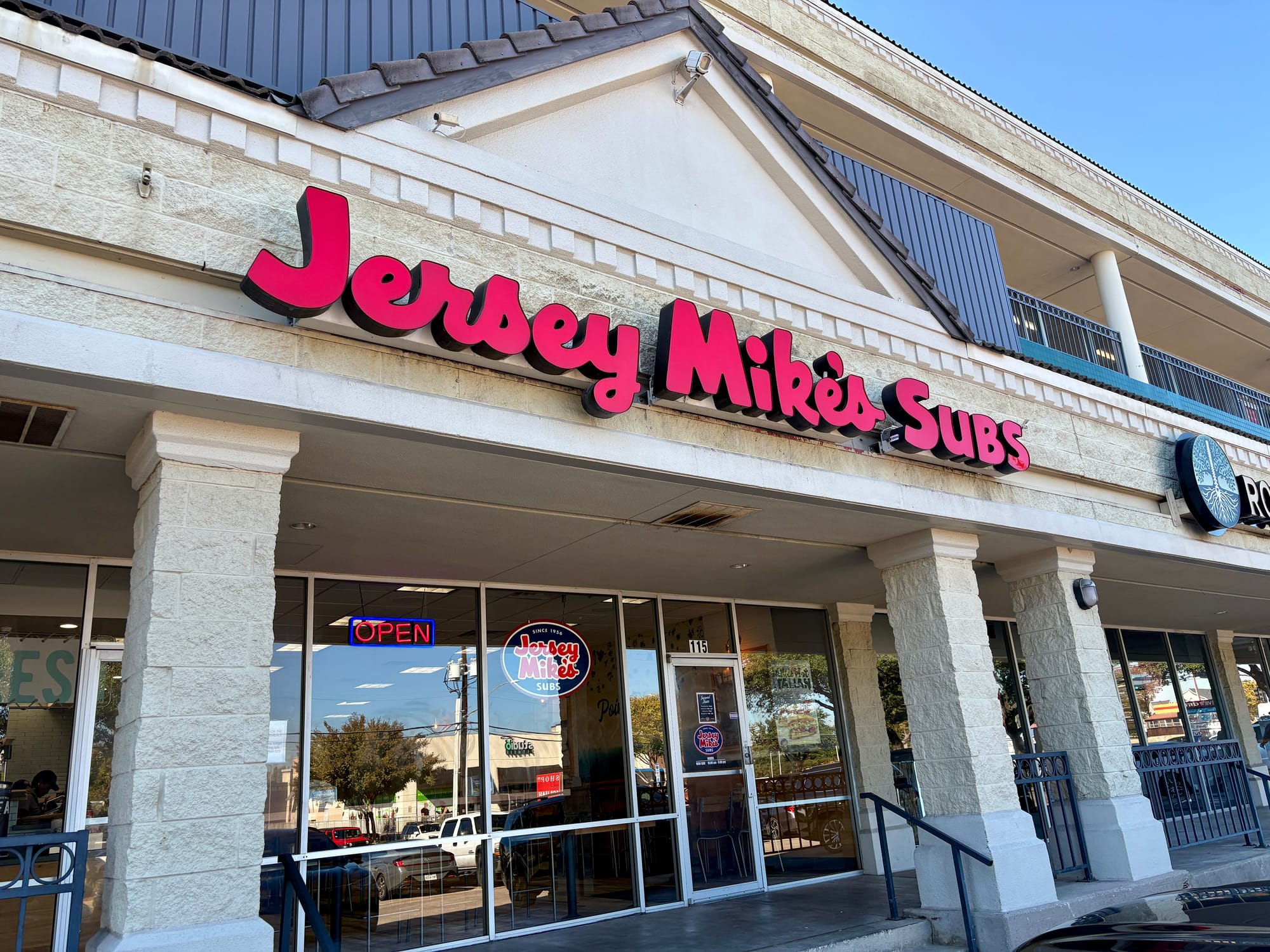
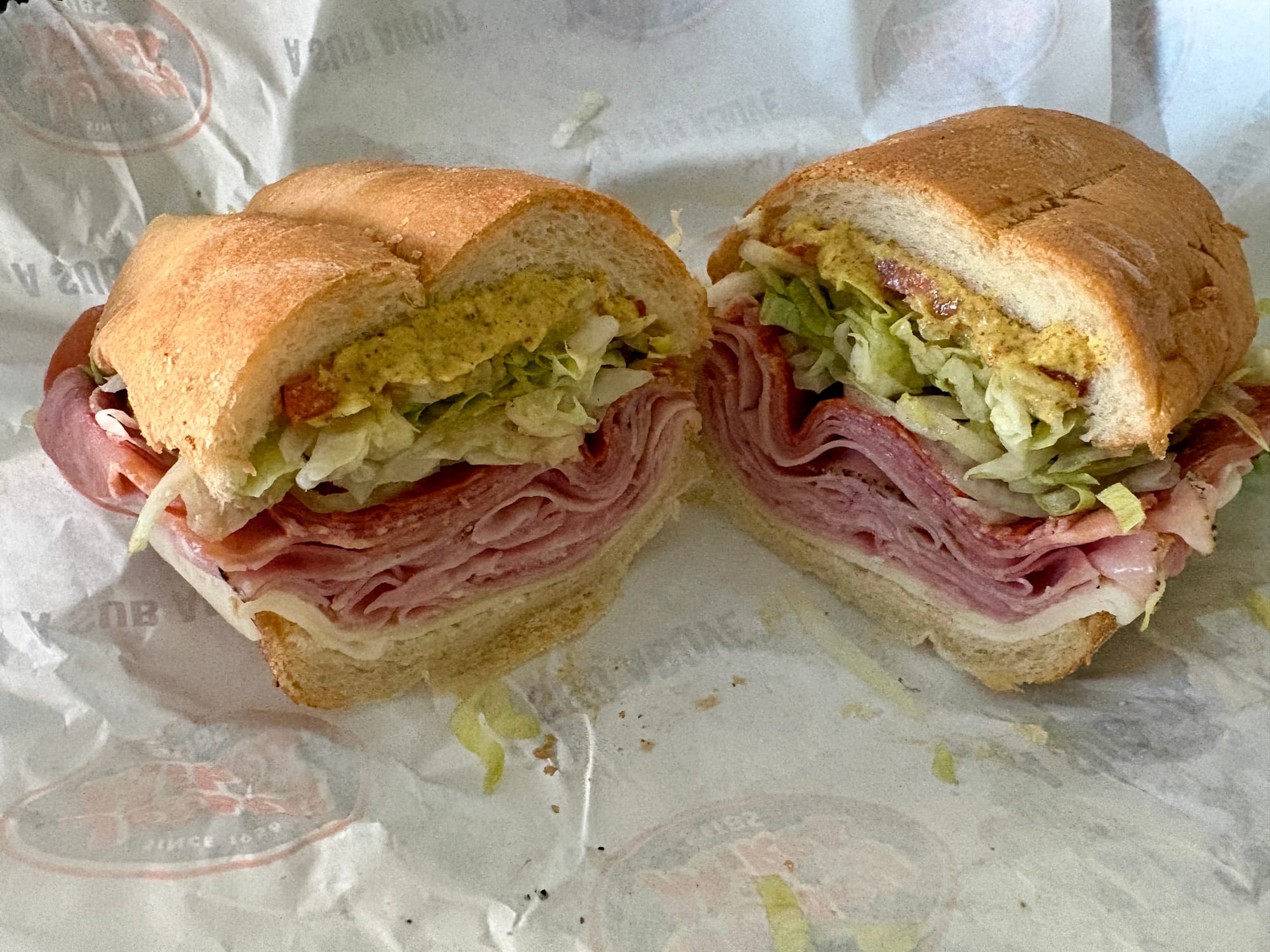
With an origin that dates back to 1956, Jersey Mike’s reached a milestone with 300 locations across all 50 states. Blackstone saw potential in even more expansion. In 2026, a giant original Italian sub from Jersey Mike’s costs around $20. Since its acquisition, customers have complained about Jersey Mike’s under Blackstone’s direction: The prices are too high, the portions are smaller, and the service is worse. Blackstone claims it didn’t change a thing about the ingredients or suppliers.
Portfolio company (PortCo): “A company (public or private) in which a venture capital firm, buyout firm, or holding company owns equity… Investing in a portfolio company aims to increase its value and earn a return on investment through a sale.” Corporate Finance Institute
Jersey Mike’s is a franchise operation, and was before Blackstone got involved. It’s a model that appeals to private equity investors because it is light on assets, says Batt. Franchisees are expected to lease locations, meaning that the franchisor doesn’t have to purchase real estate or manage those assets.
Equipment used to cook the bread or slice the meats and cheese at Jersey Mike’s is an investment purchase or lease that the franchisee is expected to pay for — and the franchisor often dictates where those purchases, along with all the food they buy, are made. The franchisor collects royalty payments and franchisee fees while the franchisee earns their money from the sale of goods. This is a great structure for franchisors, but less economically empowering for the franchisees.
“Most of the cost burden, most of the capital burden, the debt burden, is in the hands of the franchisee,” says John A. Gordon, a principal at Pacific Management Consulting Group with expertise in restaurant earnings and economics, and in franchise practices. “Franchising to me is a form of outsourcing.”
Franchise: “A business model where an established company (the franchisor) grants an independent operator (the franchisee) the right to use its brand name, trademarks, operating system, and business model in exchange for an initial startup fee and ongoing royalties.” Investopedia
The financial squeeze of extra debt, such as the $500 million Blackstone added to Jersey Mike’s bottom line, is the kind of pressure that forces franchisees to cut corners. The kind of cost-cutting decisions that maximize profit at the expense of quality — for example, the alleged smaller portions of proteins in sandwiches at Jersey Mike’s. “If [PE funds] raise the royalty rate, then the franchisees get squeezed more,” Batt explains. “[And franchisees are] going to put more pressure on workers and on cheapening whatever they can.”
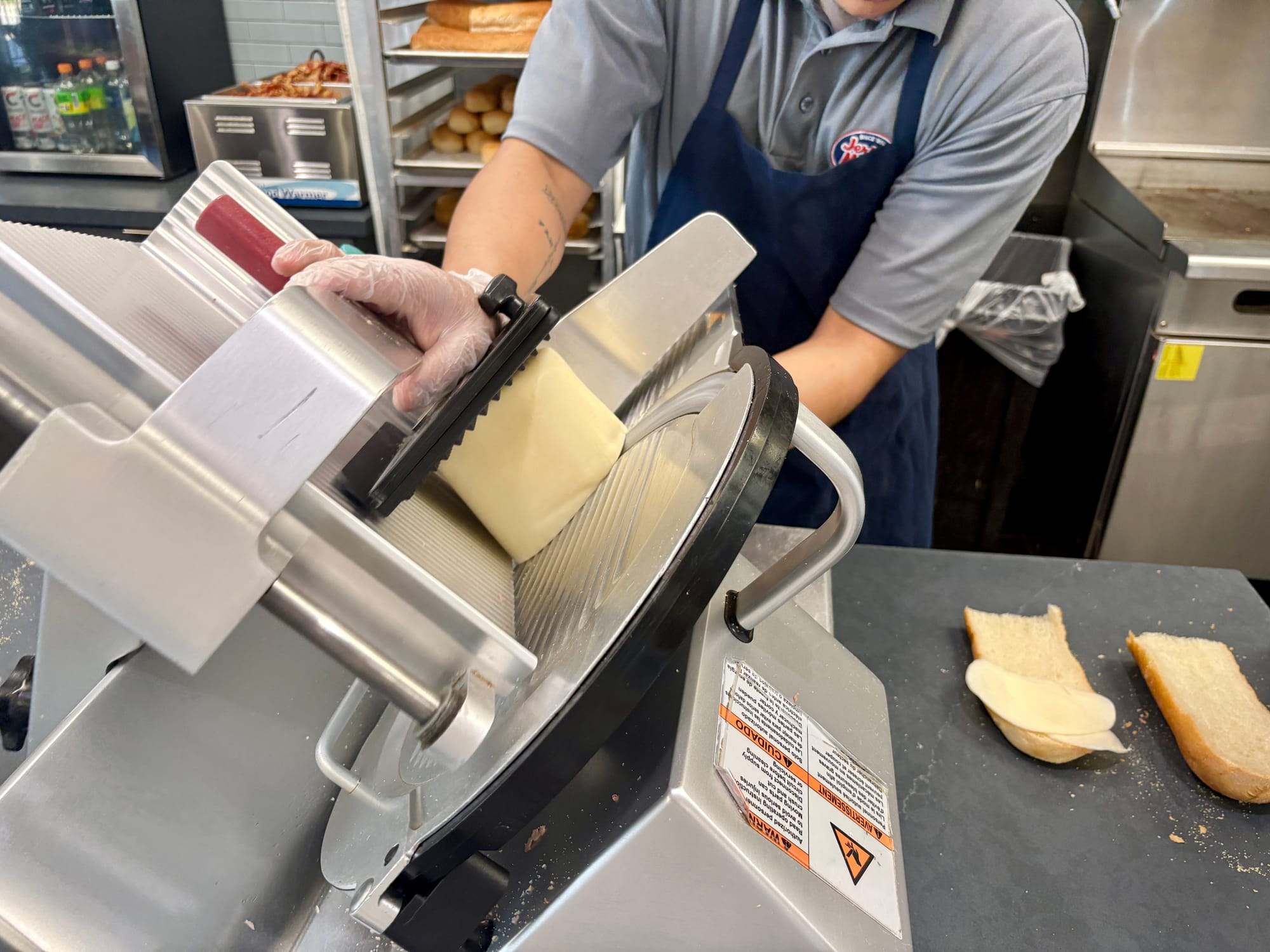
PE is currently very hot on investing in franchised businesses, the experts Ravenous spoke to all agreed. Like Jersey Mike’s, Crumbl operated under a franchise model until that began to, well, crumble as it closed 57 stores around the country and saw its sales drop 70% in the last two years. Adjusting (read: lowering) employee pay and hours is one of the most effective ways to increase the margins. Jersey Mike’s was already using Crunchtime, a predictive scheduling app that figures out staffing. It sounds like a great deal, because it significantly decreases administrative time for management to figure out scheduling and eliminates excess staff during slow times.
Leave us a tip! All the donations in our tip jar fund our incredible reporting, cultural criticism, and freelance work.
For workers, this shift often means less predictable schedules, fewer work hours, a higher workload because of tighter staffing, and fragmented shifts. “Our theory, which we couldn’t measure, was that they were able to use these technologies to track workers and to cut their hours,” Batt says.
Another part of why PE is so hyped on franchise businesses is that they don’t offer employees health insurance or benefits like 401(k)s. State laws regulate PTO, but time off isn't guaranteed otherwise by federal law. “When someone flips from a company-operated operation to a franchisee operation, it’s a real downer, because a lot of benefits are taken away,” Gordon says. “And the reason is that the franchisee does not have the same amount of wealth and working capital flexibility that the large franchisor has.”
Royalties: “Ongoing fees that must be paid to the franchisor in the form of a percentage of sales or revenue. This percentage can range between 4.6% and 12.5%, depending on the industry.” Investopedia
Batt says that her research indicates that somewhere around 90% of franchisees only own one or two locations. “They’re all mom and pops, scraping by,” she says.
PE makes its money licensing the idea of, say, Jersey Mike’s to people who then open it as a storefront and have to follow all of the franchise guidelines for how to make a sandwich, how to train and pay employees — everything down to what paper to wrap your sub in.
“[PE is] just going to take the royalty off the top, and that royalty is based on gross sales,” Batt says. “And then the incentive structure for the franchisee is to squeeze like crazy because they retain residual profits.” The only people left to squeeze are the employees and the customers.
Initial public offering (IPO): “The first time a company's shares become available on public markets, allowing anyone to buy and sell them on a public stock exchange.” RBC Wealth Management
Blackstone added hundreds of Jersey Mike’s locations in the 18 months ahead of its IPO, the Wall Street Journal reported, a massive expansion meant to juice revenue. It also meant the fast onboarding of new employees, expansive (and perhaps) inconsistent training, leading to a spotty experience from store to store that would impact how the sandwiches are produced.
Blackstone used a leveraged buyout to create an infusion of cash for Jersey Mike’s to the tune of $500 million in additional debt, raising the company’s full debt load to $2.1 billion. That Jersey Mike’s IPOed at all is unusual, says Audrey Stienon, industrial policy program manager at the Open Markets Institute. IPOs are more common in venture capital and the tech sector, while PE is struggling to take businesses to market. “Now you have shareholders who are expecting certain returns,” Stienon says. “Your management is now beholden to meeting those expectations, and your stock price is an indicator of the success of your business.. Even if IPO is a better outcome than continual private equity ownership, you’ve still shifted into a financialized value system.” In other words, a system where prioritizing financial metrics, the price of assets, and shareholder returns takes priority over social wellbeing or long-term viability.
PE investments have historically been funded by large institutions, like endowments and pension funds. “[That] is a whole other issue, because we're using workers' capital to finance private equity when a lot of the practices go against the interests of working people,” says Batt. In more recent years, some of the top private equity firms have developed funds targeted at the uber-wealthy. With practices that are the definition of enshittification, both of the end product and of the consumer experience, knowing that the wealthy are getting wealthier off of making what was an affordable sandwich worse and more expensive hammers home why PE feels so terrible.
There’s another layer to following the money, Batt says, called the 2 and 20 model. The investors in any private equity fund make up 98% of the capital. Under this model, the general partners in the fund, the people who make decisions about what to invest in, would put up the remaining 2%, but would receive 20% of the profits — that’s a significantly larger return than the endowments, pension funds, or even the uber-wealthy that make up their investors will see. So, the financiers make the most money of them all.
Moral hazard: “A situation in which people or organizations do not suffer from the results of their bad decisions, so may increase the risks they take.” Cambridge Dictionary
What happened to Jersey Mike’s, and is currently happening to Crumbl, represents the dark side of PE, where many of the least worker-friendly and least consumer-focused models end up at play in service of scaling for profits. There are firms that invest across the food chain with an eye on developing sustainable foodways, like Paine Schwartz. Or like Butterfly, which is B-Corp certified, and invests in human-driven elements of the industry, from agriculture to delivery to brick-and-mortar establishments. There are investment firms that operate with a mission and the intention to make things better, using food as an instrument to affect change.
The University of Chicago Business Law Review found that PE manages $9.4 trillion in assets across 11,500 companies that employ 11 million workers in America. It’s probably touching your life in some way, even if that’s just through a sub sandwich. The pursuit of endless growth, which almost always feels like such a grift just to line the pockets of people who are already unfathomably wealthy, is what makes PE feel so damn icky.
There is a light of hope at the end of the tunnel. Senator Elizabeth Warren posted a TikTok in September 2026 announcing that she is interested in passing some legislation aimed at limiting or ending PE involvement in food, seemingly inspired by what’s happened with Jersey Mike’s, among others. “Private equity executives shouldn’t be lining their pockets on the backs of employees who are getting paid less and worse working conditions,” Warren said in the video. She points to the 21st Century ROAD to Housing Act, which she co-sponsored, and which limits institutional investors like PE from buying hundreds of single-family homes. “If we can do it once, we can do it again,” Warren says.
Ravenous reached out to Jersey Mike's for a statement, but did not hear back at press time.
Ravenous won't ever cut corners. We're a worker-owned food publication backed by readers like you, not some faceless private equity firm looking to maximize revenue. We need paid subscribers to thrive. If you are a free subscriber, please show your support so you don't miss a story.


