

I have never thought of food without thinking of the calorie. By the time I could read, it was there, on the back of every box and jar at the grocery store, alerting me to how many of these things I was about to put in my body. I never really knew what a calorie was, though as I got older and in line with many women my age, I internalized the idea that I should eat as few as possible. But I never thought deeper about it, or about how it became the omnipresent measure of all foodstuff.
According to historian Dr. Nina Mackert, interviewed below, it didn’t have to be this way. In fact, it probably shouldn’t have. The calorie, one way to measure the energy value of food, was not a particularly good measure of nutritive value, satiety, pleasure, or many other things we need and want from our food. But the calorie “was politically versatile and therefore successful in serving divergent political agendas and arguments,” she writes in her new book, Inventing The Calorie: The Politics of Food in the Early 20th-Century US.
The calorie as it pertains to food (rather than just a thermodynamic unit of energy) was developed in the 1880s, at the onset of the Progressive Era, a time of mass social and political upheaval. People were looking for order amid the chaos, writes Mackert. And so, as a “scientific unit for measuring and comparing food needs, diets, and bodies,” the calorie represented a way to quantify something as previously mysterious as the body (though whether it actually does that is another question). In an era obsessed with classification, whether that was timekeeping or attempting to categorize race, the calorie was primed to be adopted. And abused.
It was breathtaking to read how the calorie, a scientific measurement, was used to justify just about every existing prejudiced argument, some of which directly contradicted each other. A scientist seemed to pull the idea that adult women need fewer calories than adult men out of thin air, and yet I have seen that assumption persist to this day. Capitalists used the calorie to argue “that hunger and malnutrition were not caused by poverty under capitalism but rather by poor spending choices,” and that workers should instead learn what foods are calorie-rich and cheap. It was used to uphold white supremacy, with backward arguments that people of color needed fewer calories because they just didn’t work very hard. And then, as the economy boomed and consumers navigated culinary abundance rather than lack, the calorie did a 180. It was used to encourage the white middle class to embrace calorie counting and “moderation,” to differentiate themselves from the working poor and people of color, who were assumed to not be able to control their appetites.
It also created new prejudices. The idea of the calorie seeded rampant fatphobia in America, as larger bodies began to be considered not just a happenstance of genetics, but “a sign of immoral, inefficient, and irresponsible consumption.” Health began to be calculated around “ideal” averages of weights, and the knowledge that reducing calories could reduce weight (however unreliable that association is) made being anything but slim a matter of personal choice — the wrong one.
As I read Mackert’s descriptions of how the calorie was used to legitimize anxieties that white men were “falling behind” at the turn of the 20th century, and how it was used to portray fatness as a symptom of laziness, I thought of every protein-maxxing bro that’s ever appeared on Joe Rogan’s podcast. It feels like we are again in a time of great social and political change, so is there any wonder that we are seeing white men embrace macro counting, protein gains, and other forms of vaguely scientific-sounding diet advice? Or that tech bros are constantly in pursuit of “optimization” of the human body? Or that, with the relentless marketing of GLP-1s for weight loss, we are regularly being told that thinness is as easy as taking a pill, and choosing not to do so is a personal failing? We are still looking for order amid the chaos, and over 100 years later, the calorie, and many things like it, promises that we’ll find it.
Here, Mackert, a professor of North American history and public history at the University of Hamburg, breaks down just how the calorie embedded itself into our everyday lives, and why despite constant criticism, it has endured.
Jaya Saxena: What first got you interested in looking into the calorie and its place in modern society?
Dr. Nina Mackert: I became interested in the history of body fat. As a scholar of body history, I was coming from a position of huge unease about modern fat shaming. I looked into the history of the Fat Man's Club, which was a group of German businessmen in Gilded Age America, and they centered their weight. They did these weigh-ins at the beginning of every meeting, and the goal was to be the heaviest person. Newspapers started to observe these groups with growing ridicule, so I looked at these groups as an example of increasing unease about fat at the turn of the 20th century. But I felt there was something missing on the measures that emerged at the time. Not just BMI, which became important very much later, but I felt someone needed to write a history of the calorie, because it really is a key to understanding modern society and modern fat shaming.
Calories are just so ingrained in many people's lives as the main way to relate to nutrition and food. How did people think about the relationship between food and the body and energy before we had the language of the calorie?
First off, it was not about weight loss before. People did not strive to become thin. Thinness was not yet an aesthetic or moral goal. It was connected to poverty, to hunger, to starvation. But also, bodies were not considered something under individual control. They were given by divine providence, or by fate, and there was nothing that you could control more to your liking. There was a mixture of different bodily ideals, and the absence of this individual imperative to change the body according to society’s liking. It was nothing that could be measured on a super individual level. And there were not bodily standards; not even the idea of ideal weight was born.
That was such a fascinating shift from talking about what is healthy for one individual person to the idea of an average ideal weight that suddenly you’re not living up to.
One of my early projects with this book was to make clear that measuring food in calories was not inherent; it was a decision based on a very specific industrial logic at the end of the 19th century, when industrializing societies heralded efficiency and productivity. Modern nation-states were confronted with the problem of feeding the industrial masses, and they had a certain configuration of problems. Because of the scientific discourse on thermodynamics at the time, nutrition scientists decided that energy was a productive thing to measure. And the book shows how it became an allegedly self-evident and natural thing for us to measure calories.
Whenever a political culture foregrounds individual responsibility for your fate, then it was a time when body norms were particularly aggressive and toxic
You point out how this supposedly scientific measure was used to justify all of these existing political and social views and prejudices, even when the evidence produced refuted those claims, or even when there's contradictory evidence. People seem to really be able to mold the calories to justify what they already wanted to justify. Why was this measure so easy to manipulate?
First of all, I want to say that it is a scientific measurement. And I think this is important. Contrary to pseudoscientific racism, for instance, there were all these experiments, and there were solid chemists doing things. Many natural scientists would agree that natural science produces ideas that are inherently fragile, and inherently tied to social and political problems. So it's not that I would say this is unscientific and political, but that it's scientific and political. I think this is really evident in these different efforts to set scientific standards and nutritional standards according to race and gender, for instance.
One of the most interesting things to me while doing this research was that the current critique of the calorie that most of us are familiar with was already prevalent during the late 19th and early 20th century. That is actually impossible to mold bodies or health according to food energy units, on the basis of counting calories, et cetera. I'm really interested in how this mélange of scientific ideas, of political circumstances, political problems, created this very lasting unit that obviously sits on a very fragile basis.
You write about how the calorie was used at this pivotal point in the labor movement, by the capitalist managerial class to position workers more as consumers. And this idea of consumer citizenship, where your diet, your health, and your ability to live are more about your buying habits than how much money you make. I'm curious to hear a little more about how the calorie allowed us to view others and ourselves as primarily consumers?
The calorie is about consumption, essentially. Its thermodynamic base locates the source of productivity of anything in its consumption. The idea of calories is that they provide energy for you to do something through consumption. According to the logic of the calorie, more consumption means more productivity. Even nowadays in Germany, there are always these discussions about how much money do people need? And how could we cut welfare spending? And there are right-wing politicians explaining how people can eat more cheaply by telling them about calorie counts. It can also be used in some initiatives for people to say they need to meet certain calorie needs; it holds the potential to ask for more. But frankly, it's been used most of the time to teach people how to need less.
We have some very similar stuff happening here. RFK Jr. recently was telling people they should just eat cheaper cuts of organ meat.
This large focus on consumption inherent in calorie counting is actually one of the main reasons why it became so successful in a consumer society, because consumer society is so fraught, so pervaded by notions of good and bad consumption, by notions of good and bad people, et cetera. Modern consumer society requires both self-restraint and consumption. It also measures status by consumption, and you're asked to consume, with pleasure, whatever the food industry throws at you. Many of the diet manuals in the early 20th century already say you can eat anything; you can eat butter, you can eat pie, you can eat cake, et cetera. But you’re also constantly required to exercise self-control.
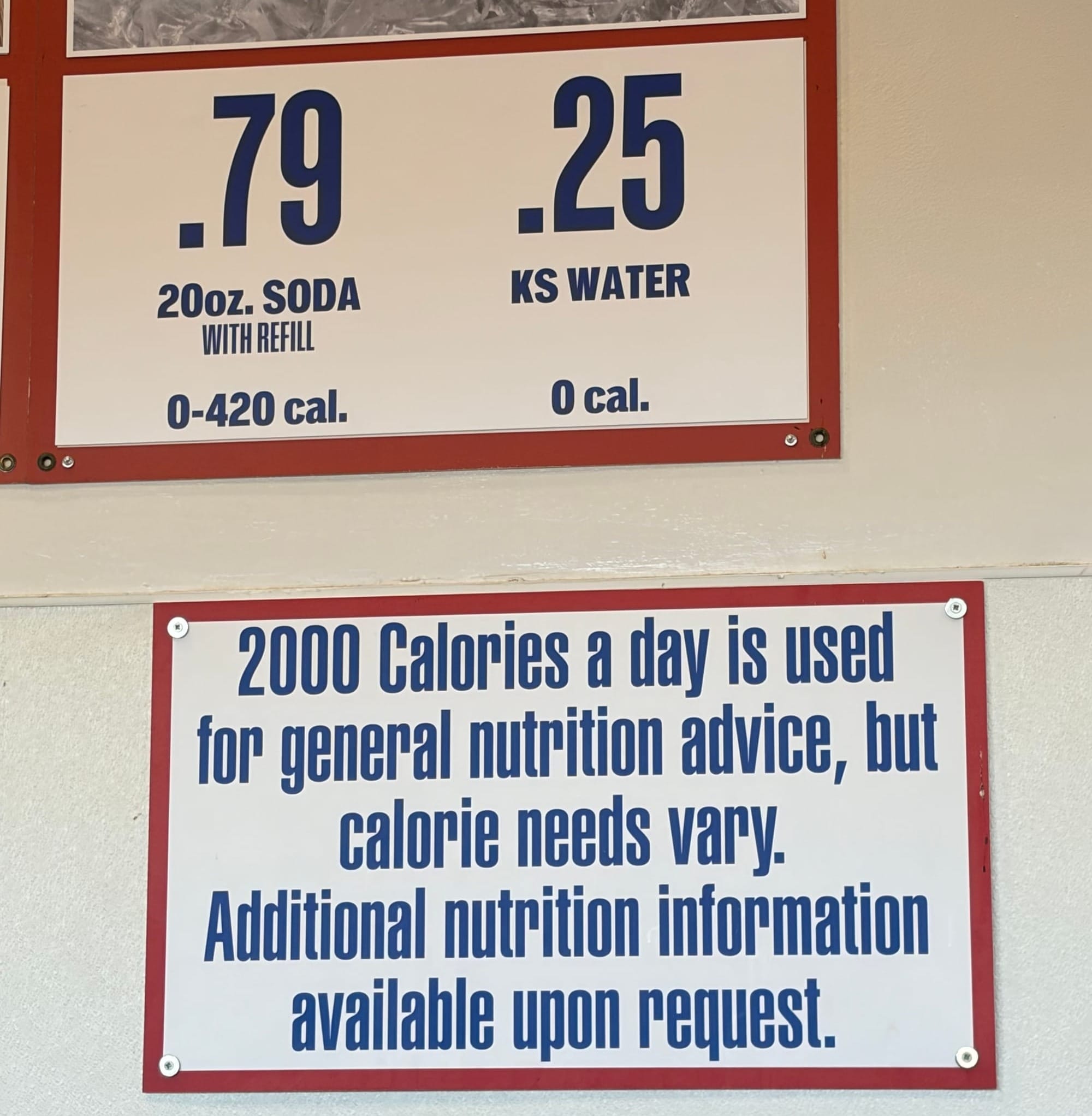
Calculations of how many calories people need vary wildly throughout its history. And now we have this 2,000 a day standard recommendation. Where did that number come from?
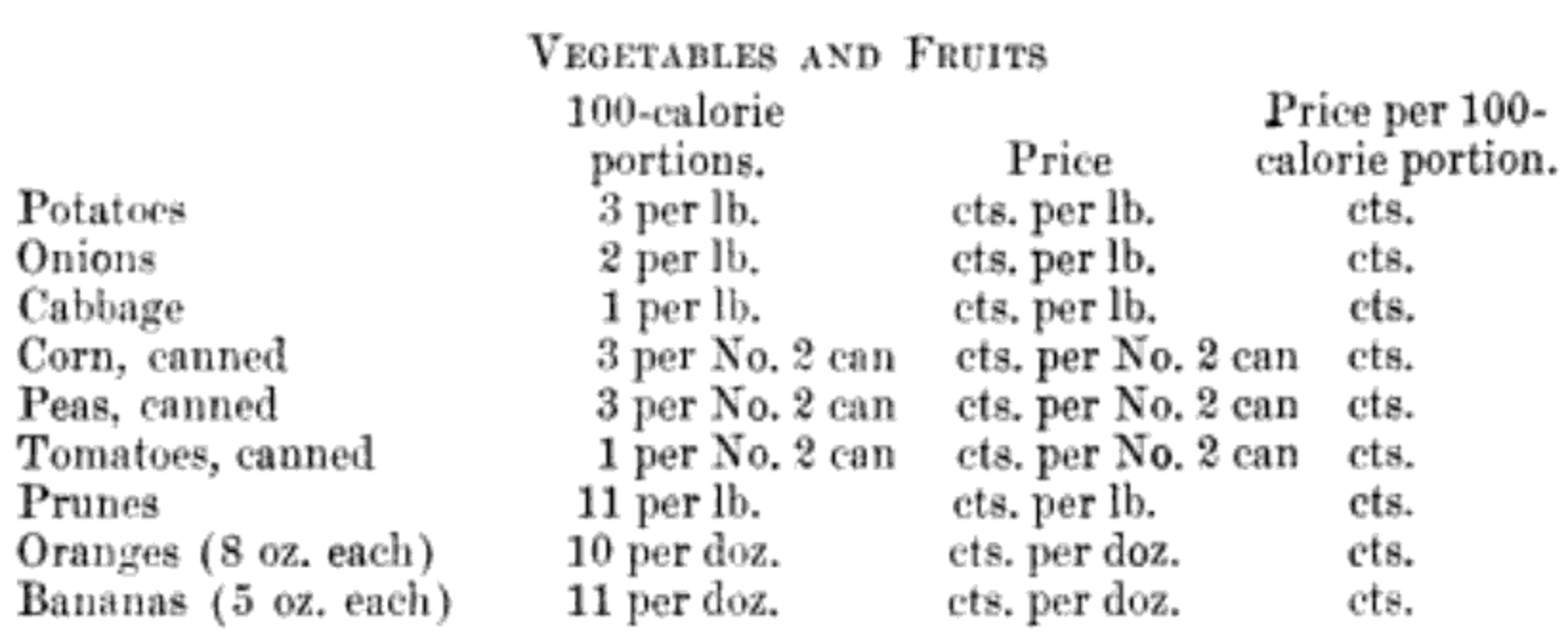
I don't actually know. Having researched the basis for these historical figures, which were already arbitrary, I can say that this number is an average for an average person, and this average person is obviously non-existent. You cannot homogenize all people by one average. But public health experts and nutrition experts and social reformers felt the need to explain dietary needs to the people in a profoundly simple manner. That's also where the 100-calorie portion came from; this idea that people needed to be taught how to eat properly. So experts came up with these very general simplifications that are so general that they might not be of use to anyone.
My interest in this project came also from observing myself. I'm not exempt from all of this. I go into the supermarket and look at the back of products where the nutrition facts are. And it's like, how do these numbers gain their power to suggest to us the truth of any particular food?
What you wrote about the Progressive Era, and the drive to view the body as this machine that can be optimized, sounded so familiar. It’s felt like recently there really has been this push for body optimization, whether it’s with protein, peptides, adaptogens, or whatever. Is there something in the air that is bringing this language of optimization back?
I do see parallels between the early 20th century and the early 21st century. But let me start with the differences. If we look back on the Progressive Era, among many reformers there was this well-intended idea of alleviating poverty and the bad consequences of capitalism. They were being paternalistic and racist in the course, but it was, I think, a different project than neoliberal health politics. If you look at the course of the 20th century, you can see that whenever a political culture foregrounds individual responsibility for your fate, then it was a time when body norms were particularly aggressive and toxic. This changed a little bit after the Progressive Era, during the Great Depression, and with the New Deal, when the focus was more on collective solutions. But you can see it coming back in the 1970s, even before [Ronald] Reagan, with the idea that people were responsible for their health, that people's individual responsibility needed to be foregrounded in public health.
We are also at a very particular moment in history right now. These movements can connect so well to neoliberal politics because neoliberal politics has been teaching us for decades that there's a survival of the fittest, and that there is a survival of the most responsible, and of the most able, and of those who can optimize themselves best. In the end, that has an authoritarian effect, because they naturalize a social hierarchy of the able, and these autocratic movements can easily pick up on that. I think that's the reason why we see this very fatphobic backlash right now.
What do you think about calorie counts on menus?
As a historian, I am interested in them, but I don't think we need to count calories to talk about health. I think they are a technology of the government that seeks to nudge people to make the right choices, but not because they have a choice, but because these choices are circumscribed in a very particular way, and calories kind of suppose or suggest us in a very particular direction.
Is there anything the calorie is useful for for a consumer?
I'm not a nutrition scientist, and I don’t have an agenda to teach people how to eat right, because I am interested in how societies talk about eating right, and how these norms of eating right work. So, I'm not the person to give advice about how to eat. I think the calorie has been important in creating the basis of modern food aid, and in modern efforts of alleviating poverty and hunger. But this also came with a certain price, so I would not say that there's any way of counting calories that serves solely great goals in an ethical way. I’d rather get rid of the calorie.
This interview has been edited for length and clarity.
Ravenous is an independent food culture publication. Subscribe today to read everything we have to offer.


