

Calabash, a new Afro-Caribbean brasserie from chef Camari Mick, has been touted as one of the most anticipated New York restaurant openings of the season. But when it announced its opening dinner on October 1, it was not to be for friends and family, nor for select members of the press. Instead, “The First Service,” as they called it, which included “a private art tour led by Gallery Director Cierra Britton and an introduction to their inaugural menu from the chef,” would be for holders of the Chase Sapphire Reserve credit card. A few weeks later, again before the restaurant even opened, Chase Sapphire Reserve cardholders were invited to book a “murder mystery dinner” at the restaurant, ballgowns and masks encouraged.
The Chase Sapphire Reserve exclusives are part of the restaurant’s deal with OpenTable, an online reservation platform founded in 1998, purchased by the Priceline group in 2014, and which in 2024 inked a deal with Visa to give certain cardholders exclusive access to early reservations and events. At the time, OpenTable touted inaugural participating restaurants like Bestia in LA, Virtue in Chicago, and Wildair in New York — the kinds of envelope-pushing, downtown cool places coveted by the kinds of people who spend a lot of time thinking about restaurants.
Choose wisely among your credit cards if you want to eat well, as having the right card is increasingly the only way to do so. In 2019, Amex bought online reservation platform Resy, where, through its Global Dining Access program, certain exclusive reservations open to Amex holders before the general public. In 2024, it purchased competitor Tock. In 2021, J.P. Morgan Chase purchased The Infatuation, the restaurant guide platform, which now incorporates widgets for users to book reservations directly on OpenTable (with those Visa perks). You also must have a Chase card to attend The Infatuation’s food festival, EEEEEATSCON. In 2024, Eater partnered with Capital One Dining to offer Capital One cardholders access to exclusive reservations through the Eater app. And Mastercard now has its Priceless program, offering reservations and “experiences” at restaurants around the world.
Even if there aren’t specific partnerships, many credit cards offer some sort of extra points or perks around restaurant dining. To eat at the coolest and most popular places, you increasingly have to have the right credit card. This has led the entire restaurant industry to bend, willingly or not, to the whims of banks. And even if you aren’t participating in the race to the best reservations, you’re probably paying for it anyway. Surely that can’t be good.
This is not a surprise. The credit card was essentially invented to make eating at restaurants more convenient. In 1950, the well-publicized, almost-too-neat story goes, businessman Frank McNamara was out to dinner at the Major’s Club and Grill in New York, and found he left his wallet at home, and complained of what a pain it was to have to pay restaurant bills in cash. Then, eureka! He and Ralph Schneider started the Diners’ Club. “It issues a credit card to some 60,000 subscribers,” wrote Hal Boyle in 1951, “entitling them to charge flowers, food or liquor, or car hire at some 700 restaurants, hotels, and car rental agencies across America.” The restaurants billed Diners’ Club directly, which charged them a 7% “rakeoff” from the account, though Diners’ Club argued the extra fees were made up for in the convenience of not having to chase down individual debts. Members were charged $5 a year for their card, and sent a monthly bill for their spending.
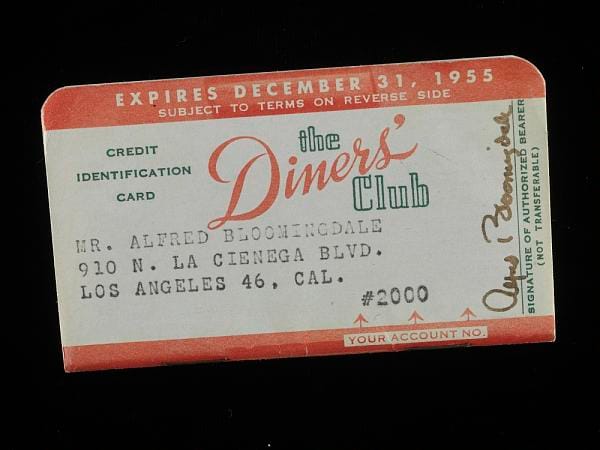
This is how credit cards worked for a long time — the perk was the convenience of not having to carry cash at the establishments that accepted them. Once more banks began issuing credit cards, they faced the problem of good old-fashioned free market competition. How to get customers to choose their card over someone else's? Enter points. Credit card loyalty rewards and points became omnipresent in the 1980s, after Texas International Airlines introduced the first modern frequent flyer program in 1979 (on the heels of the American Deregulation Act of 1978, which reduced government oversight and resulted in increased market competition). In 1986, Mastercard released the first co-branded credit card with Continental Airlines, which helped earn users miles for discounted travel. Since then, it seems, every credit card has hinged its business on rewards.
“It’s this alternative currency that for many people means nothing, but for a certain type of person is almost as important to their life as the dollar,” says Alex Mayyasi, host of Gastronomics and the author of Planet Money.
But credit card rewards ultimately hit a limit. There is only so much cash back a bank or creditor can give, or so many free flights available to earn, before the deal stops being profitable. So credit cards started looking to offer not concrete perks like cash or free flights, but access to experiences. Experiences that are a little more limited, like concert tickets, box seats at basketball games, and, of course, elite restaurant reservations.
The promise of the credit card has always been that with this one weird trick, you can live like someone richer than you. Most obviously, this is because it allows you to buy things you can’t yet afford, things as frivolous as designer watches and as crucial as medical care, and dance with the specter of debt. But as the wealthy lurched toward Veblen goods to define their status (what good is wealth if commoners can buy cashmere on Quince for $50?), exclusivity became the class marker. An 8 p.m. Friday night reservation at the hottest restaurant can’t be mass produced. So credit cards kept up with the Joneses by focusing on rare experiences, offering even the most working-class among us the chance at living a wealthy-looking life.
Emphasis on chance. Like everything in the economy, we are increasingly paying not for ownership, but for access. Having an Amex Platinum card, with its annual fee of $895, does not actually guarantee you a reservation at Le Bernardin. It just makes it a little bit easier. Though you’ll never really know how much easier — credit card companies don’t have to disclose how many people actually get the reservation or the Taylor Swift tickets. That is great for credit card companies. “Part of the appeal [for credit card companies] is that it sounds good to say that your credit card gives you all this special access, but it's potentially a lot cheaper if only a fraction of your credit card users might actually get those perks,” says Mayyasi. You don’t, the banks have learned, actually have to give them anything but hope.

It is the rare establishment that is so desirable it’ll make the modern-day diner pick up the phone. Most restaurants must utilize some sort of online reservation service, whether that’s through one of the bigger players, Yelp, or through its own website coding. With bank investment behind them, many restaurants find it more affordable, and more beneficial, to go with a platform like Resy or OpenTable than try to create their own system.
Chef Brandon Jew of San Francisco’s Michelin-starred Mister Jiu’s was first drawn to Resy because it charged a flat fee every month to use it, rather than charging restaurants per reservation. It made it easier to plan a budget. But also, “they were really great at event production, and generating collabs” with other restaurants on Resy. Recently, Jew participated in Resy’s “Love on the Line by Resy” pop-up series, with chefs from Bong, Kalaya, Smithereens, and other restaurants you’ve probably read about in The New Yorker. He also participated in Resy’s Chef’s Table festival, and notes that Resy provided financial support to Mister Jiu’s to throw a tenth anniversary party with chefs like Danny Bowien and Mei Lin. Early tickets to both were available to Amex holders.
Much of that support is also straight-up cash. Caper reports on restaurants receiving $20,000 from Resy for a series of pop-ups, and the New York Times says OpenTable has offered $95,000 to hot restaurants to switch to its platform. And in exchange, they ask that their new partners reserve some reservations or perks for the cardholders. If they’re not booked, they’re later released to the general public. This is a low-lift ask for the participating restaurants —Jew says the Amex reservations tend to go quickly, and even if they don’t, they’re snatched up once they’re made available to the general public.
But more than just filling seats, restaurateurs say these card-member perks provide them access to quality, moneyed customers. “Access to the American Express Network connects us to new diners that know the meaning of hospitality and food,” says Fatima Popal, CFO of The Popal Group, which runs DC restaurants Lutèce and Pascual, among others. These are people with disposable income who care about spending it at restaurants. And who are perhaps incentivized to visit restaurants where they have a better shot at a reservation.
Like everything in the economy, we are increasingly paying not for ownership, but for access.
Getting the right reservation has become a marker of clout, especially in an era where you can post your meal at Semma for the world to see. And it is the very nature of how reservations work in this digital age that is catalyzing reservations-as-commodity culture. “Timed drops, digital wait lists, and the rumble of availability notifications in your pocket have turned going out to eat into a competitive sport where bragging rights and social media views drive the culture,” writes Jason Sheehan in Philadelphia magazine. Getting the reservation is the brag, almost regardless of how good the subsequent meal was. Like getting into Berghain, the point is boasting that you made it in.
Ultimately, the partnerships with credit card companies aren’t the worst deal for everyone directly involved. It’s a no-brainer for restaurants in particular, which get some guaranteed reservations from big spenders and a potentially huge payout from card issuers. The credit card companies make money, and diners with the right card feel like their annual fees are well spent. Popal notes that “at least 90%” of her restaurants’ customers use credit cards anyway, and it only takes one reservation at Mirra or Kabawa, snatched thanks to the right Chase card, to make a diner feel like they’ve gotten away with something extraordinary. But for everyone else, these partnerships can make the entire business of going out to eat an expensive mess.
These may all seem to just be Champagne problems, the kinds of things that only impact the rich and privileged. If you’re never going to be able to spend $450 a person on an omakase experience, what does it matter that someone who can afford it is losing out to other people who both can afford it and have a better credit card (not to mention bots, AI agents, and reservations being sold on the black market)? For one, it’s because you’re likely subsidizing it.
Have you ever seen a sign in a business’ window that says they don’t take American Express? It’s because they have traditionally had higher swipe fees, or the fee the bank or card issuer charges a business to process a credit card transaction. The 2011 Dubin amendment sets limits on swipe fees for some debit cards, but so far there are none for credit cards. According to the Merchants Payment Coalition, credit card swipe fees average 2.36% per transaction, but go as high as 4%. In 2025, Americans paid $198.25 billion in swipe fees.
Some businesses have tried to offset these fees by refusing to take higher-swipe cards. But credit card companies also mandate that if companies take one version of their card, they must take them all, so you can’t say you take Visa debit cards but not the Sapphire Reserve. And while it is perhaps easier to exclude American Express, Visa and Mastercard combined make up 85% of the card market. If you take credit cards at all, there’s just no excluding them.
Of the $198.25 billion paid in swipe fees in 2025, credit cards collected $157.8 billion, with Visa and Mastercard specifically taking in a combined $118.8 billion. The money made from swipe fees is crucial to a card issuer’s ability to grant perks, whether that’s cash back, points toward future purchases, or dumping a carload of money into a restaurant that signs on with its reservation service and agrees to hold a few tables for its credit card members. “Those really high reward cards, like the Chase Sapphire Reserve card, generally do have a higher swipe fee,” says Mayyasi. Like, the money had to come from somewhere.
Ravenous doesn't take money from credit card companies, or other large investors. We run because of our amazing community of paid subscribers. Subscribe today for more in-depth writing about food and everything it touches.
These extra charges influence everyone’s daily spending, whether they use a high rewards card or not. Sometimes it’s as obvious as businesses adding extra fees for credit card transactions. But sometimes, businesses just start raising the prices of all goods. This creates “a reverse Robin Hood effect, a small but shitty redistribution of wealth,” says Mayyasi. After all, you are usually only eligible for a high rewards credit card if you have good credit, which correlates to higher income and wealth. So, per Mayyasi, “if you have a really high rewards credit card, [extra fees or raised prices] are not a problem for you because you get all that money back, and probably even more so, from your credit card rewards. But someone who's lower income, or pays with a debit card or with cash, they’re paying those higher prices and they're not getting it back in rewards.”
Writing in the Boston College Law Review, Trevor H. Fry puts it even more bluntly: “Hidden behind this veil of elegance, luxe, and ease is a darker truth: these rewards are built and funded on the backs of an inequitable system that exploits those who are unable to access the exclusive world of credit card rewards.”
While swipe fees are a problem for all businesses, it seems they are actively contributing to one of the main complaints about restaurants these days: They are too expensive, and it doesn’t feel like there is such a thing as getting one’s money’s worth anymore. We are living in a world of $60 loaves of bread and $90 plates of barbecue, a world in which I recently ordered a cocktail at a suburban mid-range hotel and was floored when I was charged $21. According to the National Restaurant Association, processing swipe fees is the third largest expense in any restaurant, behind food and labor. And like with food and labor, swipe fees become a huge part of a restaurant’s pricing calculations. “It’s not like I want to pass these fees onto my guests, but you know, unfortunately, it’s a necessary evil just to kind of stay alive, especially as credit card fees keep going up,” Tom Cuomo, owner of Dino’s Pizza in Durham, North Carolina, told the News & Observer.
To offset costs, Dino’s has raised prices 7% across the board and adds a 3% surcharge to bills paid by credit card. And that’s just at a casual pizza place. Not only are your purchases subsidizing someone else’s ability to score a prime reservation, they’re also likely contributing to the reason you can’t afford those restaurants in the first place.
In her 2005 memoir Garlic and Sapphires, food critic Ruth Reichl recounts her deeper experience visiting The Box Tree in 1998, a restaurant she wrote in the New York Times was “a pretentious place serving fancy, not very good Continental food for $86 a person.” Yet it had a reputation as a romantic restaurant, the kind of place where you’d celebrate an anniversary, or plan a proposal. Reichl recounts being seated next to a couple, the man perhaps in a rented suit, who looked “young and callow, poor and hopeful.”
It’s a strange chapter, in which she declares they “look like they’ve been saving up for this meal,” as if that is a bad thing. But when the food reveals itself to be so thoroughly awful, Reichl’s dining companion strikes up a conversation with the couple. The man admits he indeed has been saving up for their first trip to “such a fancy restaurant.” He agrees that the food has not been very good, despite “the books” all saying it was the best place. Reichl finally melts at their misfortune, picks up their check, and helps them get a reservation at the Rainbow Room, arguing it’s her job to make sure people don’t waste hard-earned money on bad food.
You’d be hard-pressed to find someone who hasn’t saved up for a nice meal. These are the occasions that punctuate life, the things we look forward to and dress up for because they are a departure from the everyday. It’s going to a steakhouse for your sister’s graduation, or asking your friends to celebrate your 40th birthday with a tasting menu. And ask any restaurateur, and they will tell you they want to serve people who are excited to be at their restaurants, not just people with money to burn and the right credit card rewards.
Reservations, “once a simple agreement between you and the restaurant, are now a commodity that other people can profit from,” wrote former New York Times critic Pete Wells in 2024. Turning the elation of getting a prime reservation into something as black-and-white as a matter of having the right credit card, and having those credit cards’ fees impact everyone who wants to dine out, means banks and credit cards get to have undue influence on the entire restaurant industry. It allows them to decide which restaurants get big payouts that allow them to keep running, even how many reservations are available on a given night. This influence touches consumers too, because if you do save up, as every purchase is in some way being siphoned off to give someone else cash back rewards, your chances of spending that money at a worthwhile place are that much slimmer. The people who already could afford this level of dining have a better chance at doing so, while everyone else falls a little farther behind.
It will not always be this way. Across the country, state legislatures are attempting to regulate swipe fees, with varying degrees of success. Some states, like Connecticut, have prohibited businesses from passing on the credit card fees to customers. However, credit card companies don’t care where the money comes from; that legislation only shifts who’s paying from the customer to the business. In 2024, Illinois passed the Interchange Fee Prohibition Act, which banned interchange fees related to taxes and tips, but has been preempted by federal law. Other states like Colorado, Delaware, and New York have proposed similar legislation. Then there’s the proposed Credit Card Competition Act, which would require large banks to issue cards from outside the Visa/Mastercard duopoly, so the increased competition would theoretically have the effect of lower swipe fees. It has gained bipartisan support, even from President Trump.
If you’re never going to be able to spend $450 a person on an omakase experience, what does it matter that someone who can afford it is losing out to other people who both can afford it and have a better credit card?
“Americans are struggling with everyday purchases like groceries and gas, and credit card swipe fees inflate those already exorbitant prices,” said sponsor Sen. Dick Durbin (D-IL) in a press release. “By bringing real competition to credit card networks, which is currently dominated by the Visa-Mastercard duopoly, we can reduce swipe fees and hold down costs for Main Street merchants and their customers.”
There is also a class action antitrust lawsuit against Visa and Mastercard over swipe fees charged to retailers. Numerous groups are calling on a federal judge to reject a proposed settlement, arguing it doesn’t go far enough. “As proposed, this settlement would trade away merchants’ antitrust claims for a mere 0.10% ‘rollback’ in the average swipe fee (effective for just five years),” writes antimonopoly lawyer Basel Musharbash on X. He argues the settlement would create loopholes the companies could exploit, and essentially allow them to keep their duopoly.
On the restaurant side, newer players in the reservation world appear more interested in cultivating loyalty directly with users than with banks. Sevenrooms, a reservation platform owned by DoorDash which has courted restaurants like Semma and Carbone Las Vegas, allows restaurants to offer their own upselling and does not partner with credit cards (though if your credit card gives you extra points on DoorDash that’s probably useful). Then there’s Dorsia, a members-only reservation platform one must apply to for more exclusive tables, but presumably one can become a member regardless of bank affiliation. Capital One also closed its dining program in September.
However, OpenTable recently announced the extension of its agreement with Visa through the US, Mexico, and Canada. “The next phase will broaden the Visa Dining Collection in Mexico and Canada and deliver an expanded events program, giving eligible Visa cardholders more ways to discover and book memorable dining experiences across the three countries,” it says in a press release. Citi and Mastercard also announced an expansion of the Curated Table series for Citi Strata Elite members, which offers exclusive fine dining experiences tied to events like New York Fashion Week and Art Basel. And Resy’s partnership with Amex does not seem to be going anywhere.
“These partnerships keep us connected to the diners who actually value hospitality, and are interested in discovering exceptional restaurants,” says Popal. I have no doubt that many specialty credit card holders do value great dining, and choose their cards precisely because they support that interest. But when certain cards present as totems of the wealthy, with exclusive reservations and dining perks as part and parcel of that lifestyle, then you’re going to get a lot of people who snap up those reservations because that’s just what rich people do. Many restaurants, especially of a fine dining caliber, rely on these partnerships to keep afloat, meaning they rely on clientele who may be more interested in the perks than the actual meal. And those of us who save up for a great meal have to fight that much more to get in.
There is likely a ceiling on how high swipe fees can get, and more reservation companies are realizing they want customers to be loyal to them, not to their credit cards. “This is probably not going to last too long,” says Jew of the boatloads of cash being dumped into the restaurant industry from banks and credit card companies. Maybe that will herald a day when anyone can get a reservation if they refresh the website at the right time. But the credit card wars have only revealed what’s been hidden the whole time: That reservations, on some level, have always been a matter of status, and the meal that might be great has become secondary. Not that most of us will ever know.
Ravenous relies on our paid subscribers to keep us going. Subscribe today for more insightful writing about food and restaurants.


