I went to San Antonio in 2024 to eat my way through what is possibly one of the most underrated (yet still up-and-coming) food scenes in the country right now. Food trips require a lot of stops at coffee shops to take a mental break, but also to drink coffee for… reasons… that you can certainly guess. I learned that San Antonio also has a vibrant coffee house scene, which tracks because it is home to six colleges (two of which are satellites of major public universities) and four community college systems. The kids have to caffeinate, at the very least.
One of the best cups of coffee I had was at a place called Stranded Coffee, in a now-closed storefront. The spring menu featured a slew of orange-infused coffee options, leaning into the seasonal produce. The tiny shop boasts a cool and peaceful aesthetic with cream walls and terracotta orange cups. There were very few seats inside; it was mostly patio, but the weather was kooky, so that wasn’t an option on this particular morning. I walked in with an idea in my mind’s eye that I’d sit at the countertop facing out, with a view from the window out into the world, while holding a nice cup of coffee and working on my laptop for a little bit.
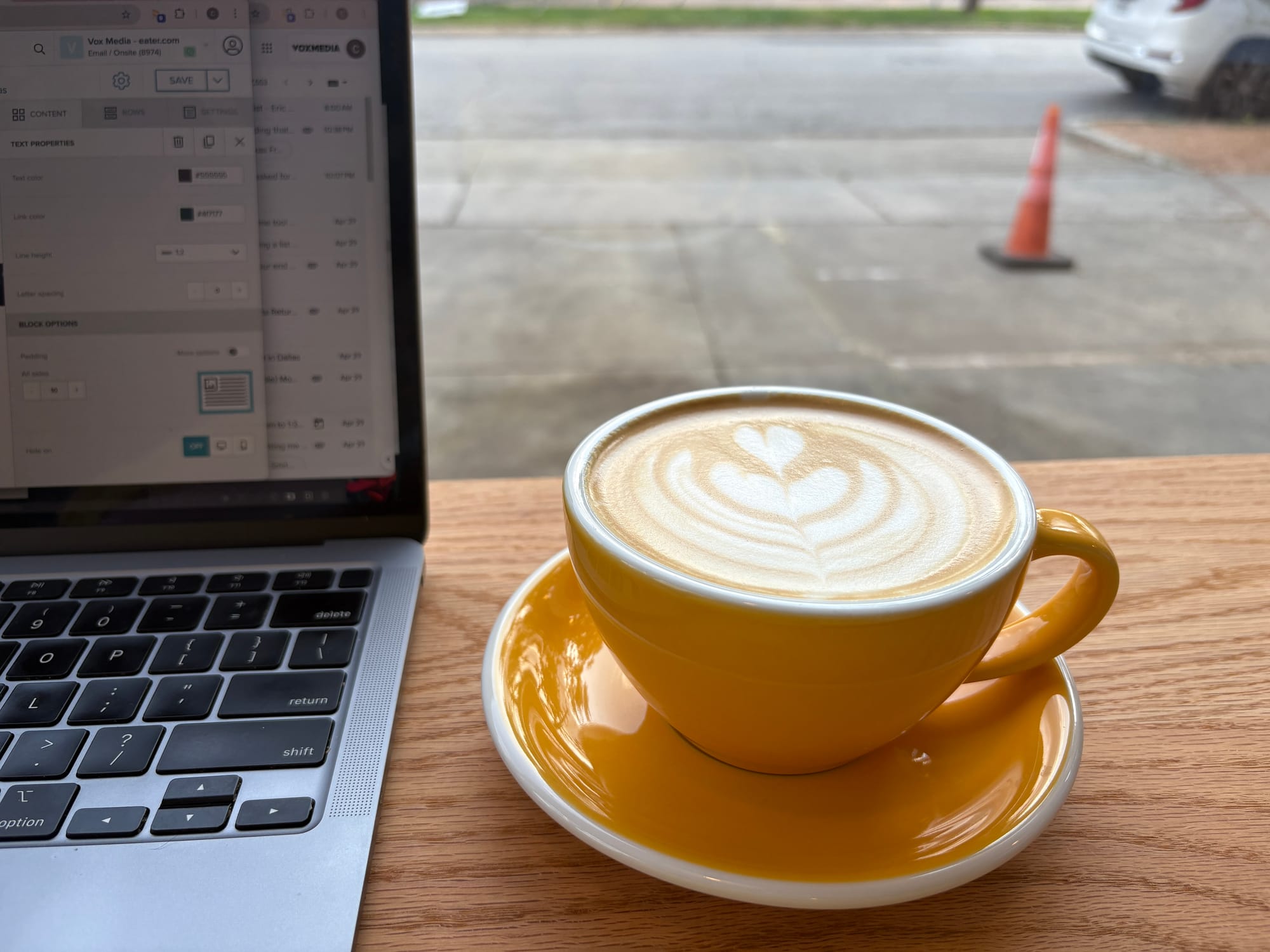
But upon opening the door, I was hit with a wave of screamo, which is a subgenre of emo with all the whining about relationships that is a hallmark of that genre, mixed with musical influences from hardcore. So it’s complaining faster and louder. The genre emerged in the ‘90s, but these baristas were listening to second-wave stuff from the ‘00s — it was giving Hawthorne Heights and Senses Fail. Like, not even on the cusp of being hipster post-hardcore stuff from Thursday or Cursive, just straight up Warped Tour. “Ah, so the millennials have entered the coffee industry with a bang,” I thought to myself. I stayed for the duration of that cup of coffee, but it certainly drove me out more quickly than expected. I’m an advocate of getting a second cup when the vibes are good, but all the trick knots in the world couldn't have kept me in that stool.
I don’t think this was a ploy of the sort Ashok wrote about previously to turn seats in the coffee shop. The staff was singing along. I think this was the music they liked best and were lambasting me and the business bro in the seat next to me at 9-something a.m. My main clue was all the silent singing-along happening behind the counter. At the time, I wrote it off as a fluke; these kids just took the aux that day, and when front of house and back of house share the same sound system, shit happens. Nothing good for the consumer (coffee shops play “Starbucks music” for a reason), but you know, whatever.
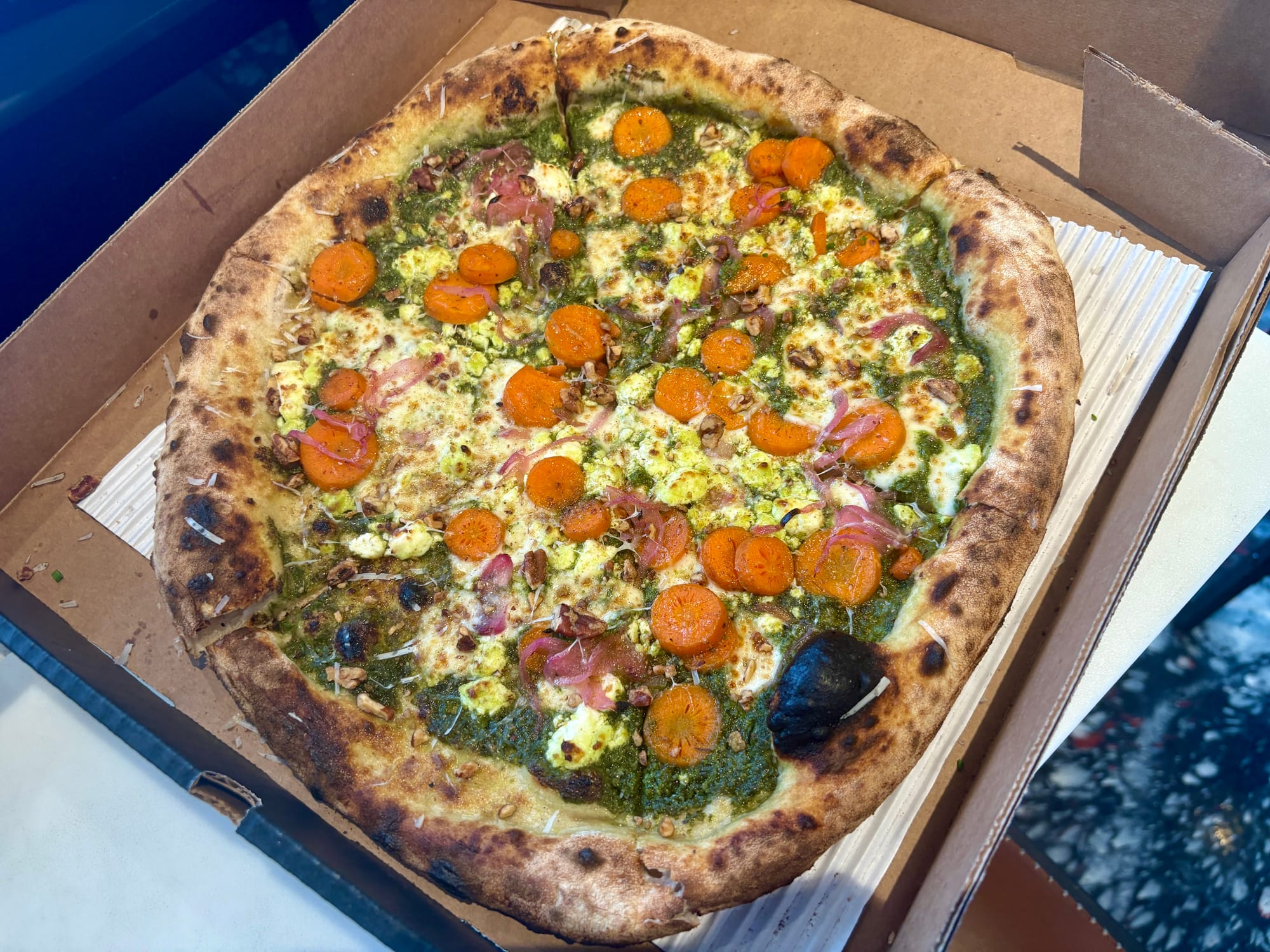
I ran into the same thing at Talespin Pizza in Houston a few months back. There is no real dining room to speak of there either, just two high-top tables if you absolutely insist on staying — this excellent spot would prefer you take it to go, obviously. And there is no space between the expansive kitchen (I got a look at how massive it is when I had to walk a labyrinth to get to the restroom) and the customer. Unfortunately for this purveyor of some truly excellent neo-Neapolitan-style pizza, or unfortunately for me, a hater of screamo, they were — again — absolutely blasting it. I started to think that some separation between the kitchen and the music tastes of line cooks was a really good idea.
There are many reasons based in science why you might not want to play screamo in your restaurant, coffee shop, or whatever you’ve got, and they aren’t just because Courtney doesn’t like emo generally or to hear people screaming at her more broadly. First are decibel levels — music where the singer screams rather than delivers lyrics in a standard tone creates higher unamplified decibel levels that can damage hearing. To quantify that for the layperson, the average human speaking is talking about 60 to 75 decibels (dB).
Singing soft rock averages around 70 to 85 dB (this is where Bon Iver’s “Skinny Love” lands, and so does Christopher Cross’s “Sailing.”) Classically trained opera singers register at 95 to 105 dB (Richard Wagner and Richard Strauss, with their sharp, laser-like demands for singers, land here).
People screaming the lyrics at you in death metal, hardcore punk, and screamo? That’s 95 to 105 dB, thanks to the use of high-pitched fry screams and false chord screams to make a wall of sound with the voice. Geoff Rickley of Thursday belting full-on in “Understanding in a Car Crash” is in this range. 100 to 115 dB is the equivalent of standing next to a power lawn mower or having someone honk a car horn at you up close. Prolonged exposure is problematic. Don’t do it to your customers or to yourself, no matter how angsty you feel. (Editor’s note: The tide is even turning for Chicago’s legendary Kuma’s Corner, the burger joint known for loud music that opened in 2005.)
It is also well-established that music can manipulate consumer moods. It’s why soothing, well-known songs for the local demo play in the grocery store (so you feel comfortable and familiar), why fancy restaurants play jazz, classical, or piano music (to create a sense of elevated place, influencing a higher spend), and why Starbucks let Sonic Youth curate an album to sell in the store but would not actually play their noise rock, opting instead for Beck and Norah Jones.
Getting customers to stay might not be anything a small coffee shop or pizza spot built for takeout cares about, but everywhere should be thinking about the associations people who interact with their business create. If they, like me, hate the music that is playing, the idea is created that this place isn’t for them. It can feel uncomfortable to be there if you’re given the impression that you’re an outsider. Quick service spots don’t need to worry about making customers feel so comfortable that they stay forever, but they do still need to worry about alienating them by choosing music that is unpopular and so complex that the average person finds it challenging to listen to.
Finally, there is the impact music has on decision-making for customers. High arousal music, which is anything with a fast tempo, strong and steady beats, or rising crescendos (aka the chorus of every screamo song ever), triggers the sympathetic nervous system. That’s great if you need to keep the line moving in the kitchen. Not so great for keeping customers cool. It increases their heart rate, no matter if they’re standing still. They breathe faster. It makes any wait seem longer and more aggravating. It makes them more irritated, conflict-prone, and overall more unpleasant to deal with. In short: It is probably making the staff’s life worse overall.
For your sake and mine, put a different genre on.