

My earliest memories of Amy are of her yelling at someone on Slack. I mean this in a good way. Before I ever met her in person, I knew she was someone with principles, someone who wasn’t afraid to argue for what she believed was right. She has a long history as a union representative, and has written about food, music, pop culture, labor, and more over her career harboring a deep curiosity about her subject matter with the bravery to say what needs to be said plainly. It’s something I’ve long admired about her, and something I’m so excited for her to bring to Ravenous.
Jaya Saxena: Okay, so who hurt you such that worker-owned media seemed like the way that you wanted to go?
Amy McCarthy: The whole media industry is horrible. I feel like being in the middle of the country has always meant working on the fringes of what felt like “real journalism” for a long time, and every job was exploitive on some level. When I was a freelancer, I was making $25 a blog post at my local alt-weekly. I was writing for Bustle and pumping out seven or eight stories a day. When I got a job, it was a part-time job where I was paid a stipend of $1,500 a month to run the site. And when I got hired, it was just constantly like, “Well, you're doing great. We just don't have any more money.” I felt like I was doing good work, but I was consistently constrained by the corporate bullshit of it all.
And, of course, I got laid off, which now feels like a blessing in disguise. Partly because I had a very strong severance that we worked very hard to negotiate as union reps, but also partly because I was feeling creatively stagnant. I was like, why am I even here, especially if there's no real stability associated with corporate media anymore. It feels both financially unsustainable and logistically unsustainable.
I think something that's become abundantly clear is that the niches are where things matter. People are trying desperately to find something special to pay attention to, not a general interest slop factory.
I want to hear more about your perspective on food media as a Texan. I live in New York, and so much of the media is centered here and in other cities deemed “cool.” And the Dallas suburbs are not generally given that treatment. What do you feel stays missing in food stories when that happens?
When I started my career, I thought a lot about things like, do I have to move to New York? But I decided pretty early in my career that I didn't want to do that. It’s important for me to tell the stories of people who weren't getting told, and that is something every journalist says, but I think the middle of the country just is so ignored. There is a perception that if it’s not happening on the coasts, it’s not really happening.
I believe there is good food everywhere. When I was working at Eater I felt like I was noticing trends that weren't “cool” but that people all over the country cared about. Like dirty sodas, that was not something that was gonna be on the radar of cool food writers, but as soon as I saw it, I knew it was gonna be a thing. I think having that distance [from the coasts] really has been beneficial for me. I think I've been able to identify things that would have otherwise gone under the radar. I like to write about mass culture. I like to write about fast food and chains and things like that. And this is the place to do that. This is the land of chains.
What’s your favorite story that you’ve ever written?
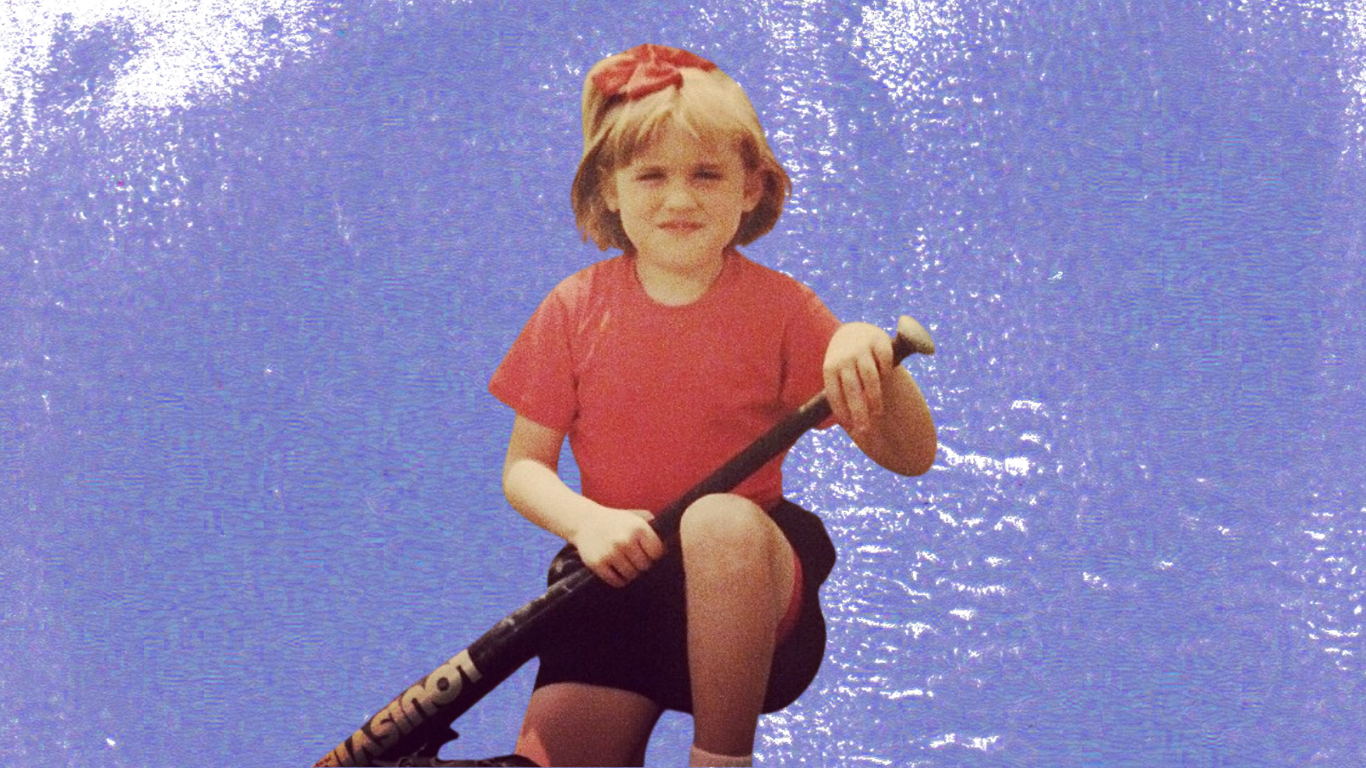
My favorite stories are always the weird ones, the ones where I get to talk to weirdos. One of my favorite stories I did at Eater was the piece about rebel canning, or the people who deliberately ignore the food safety rules, foodborne illness be damned. I love to do histories of things, like Pyrex collecting or Oklahoma onion burgers, which is a thing that not really a lot of people knew about that had a legitimately 100-plus-year history. I'm working on a story right now about the invention of ballpark nachos, which is something that has existed for 50 years as of this year, and I didn't even know that it was invented at the home of my favorite baseball team. (Editor’s note: Amy is a Texas Rangers fan)
It’s such a fun part of what we get to do, and it applies to what you were saying before, this idea of wanting to be trusted to notice things that are happening in food culture. That was just getting so lost in corporate media.
To me feels like that's what a site should be, just letting people lean into what they know. And in our previous work, we were often too early to trends. We were noticing things before they had really jumped on into the zeitgeist because we have all of this experience in journalism, we have all this experience in food. Of course we're good at identifying what's gonna pop.
What even got you into food writing in the first place? Because I know you have done music writing too.
I've written about literally everything. I wrote an ebook about car finance before I had ever financed a car. But my first job in media was at a food bank, as their social media guy, in 2009 when a lot of businesses were just starting to get on the internet. And I had to work another job, and I ended up getting a job at this parenting website – again, I had no children.
Eventually I was laid off, and got some severance, and I’m 23 or 24, so I decided I was gonna be a freelancer. And I sent an email to the then-editor of the Dallas Observer, and was like “I am smart and know about food, and you should let me write about it.” And I was really neither of those things. I knew about food in that I liked to eat it. I had no journalism experience other than writing for my friend's feminist blog. So I wrote there for a couple of years, and then I started freelancing at Eater.
God, I love your wild confidence, just cold emailing even though you didn’t know anything.
That’s really all I had, Jaya, is opinions. Now I have experience and skill. I just started with opinions.
What’s your most controversial food opinion?
I have a lot. I don't like olives or beets. I've softened on olives a little bit, but I think beets ruin everything that they touch. I love a canned, condensed soup. The things that it can accomplish in terms of emulsifying a recipe or just putting sodium and MSG up in there are very effective. I also have very strong opinions about deli sandwiches. I hate a sandwich that's too thick. A sandwich is a marriage of ratios.
What do you think makes a great restaurant?
I think anything can be a great restaurant, whether that's a taco stand on the side of the road, or a fancy place. I also think any place can be a bad restaurant. Attentive service is the most important thing to me, whether that's a nice lady who makes sure that you have your salsa with your tacos or whatever. I think hospitality is a lost art. I think restaurants have crushed their staff to a point where they can't do it anymore because they won't hire enough people, they won't train them, they won't invest in the concept of service as a career.
That's really why a lot of restaurants kind of suck now, and why so many people are having bad experiences at restaurants. It’s a number of reasons, some are practical, and some are profit-driven. And when you do have it, when you go to a great restaurant where you just feel so taken care of, what an experience.
Do you have a favorite thing about the greater Dallas food and restaurant scene?
I live in Dallas because it’s a very convenient place to live. It's a three-hour flight to either coast. The shopping here is completely unmatched anywhere else except in New York. I think all the best food, with a few key exceptions, is in the suburbs because that's where all the immigrants live. I live in Richardson, and I can get the exact same quality Persian and Mediterranean food here that I can get anywhere else except for those respective places. And Tex-Mex, I truly would not survive without it. I'm from the South. My family's from Louisiana, and once I get out of the “seasoning belt,” things get a little complicated for me. Unfortunately, I think Dallas food is very driven by people who have more money than sense or taste, but it doesn't have to be that way.
What do you hope comes out of Ravenous? What do you hope we look like in a year, or five years?
I hope we all become fabulously wealthy and famous beyond understanding. But really, I just want a place for the people that I think are the smartest and most thoughtful writers in food media to work. None of us have a fucking job. All of the people I respect most in this industry are unemployed. That really is a reflection of where we are in media.
I want us to do incredible work. I want us to tell the stories that aren't being told. I want us to lean into our passions and make the best food website ever, but I also just want us to have some stability. And to be able to do that work without wondering how we're gonna pay our bills or pay for health insurance. And perhaps most importantly, to be able to do that work without some fucking idiot coming along and saying, oh, this work that you're doing that everybody loves, we're not gonna do it anymore, we're pivoting to an app or whatever. That's what I care about more than anything, the longevity of being able to do this work that people love, that wins awards, that I want to read.
Ravenous is a worker-owned food culture publication with reporting and long-form features on restaurants, dining, and wider food culture around the country. And currently, we are in the middle of a subscription drive to support our launch. Ravenous will include opinionated commentary and news analysis on everything from pop-culture moments to fast-food snafus; coverage of books, television, and movies that touch the food world; and — perhaps most importantly — stories that unapologetically allow our individual personalities and tastes to shine.
We are sick and tired of the conversation around food being reduced to AI-generated drivel, “best of” lists, and influencer-driven dreck. Ravenous will be a place where we write the stories that really matter — the kind of stories that affect change in the hospitality industry and everything it touches, alongside fun and informative pieces for our readers.
If that sounds like the kind of journalism you're interested in, subscribe and join us.


