

If you asked Frances Dumlao where she’d be in five years time before COVID hit, she wouldn’t have told you Ann Arbor, Michigan. She grew up in northern New Jersey and visited New York City on her own for the first time at 10 because it was one train stop away.
But struggling to just function in the city during the pandemic was enough to push her and her partner, who she was just dating at the time, to the heart of Big Ten country. “I have a memory of going to CVS, waiting in an outside line, and then buying Hot Pockets because that's what you could buy,” she recalls. “The grocery store lines were so long. We just needed to get out of there.” Family health issues made Ann Arbor the place they landed, and thanks to a long-running remote-work first policy from her then-employer, Eater, they stayed.
After a round of layoffs, Frances joined Ravenous as a founder-owner. Here’s why she decided to take the leap after a long career at legacy media brands, plus a look back at her childhood and formative food memories, and her most controversial food opinion, which puts a Michigan burger place on blast.
Courtney E. Smith: This is either the easiest or the hardest question, and I don't know which one it will be for you. Why are you doing Ravenous?
Frances: I'm doing Ravenous because I spent a lot of my career in New York, in the media industry, working at these large media corporations — Condé Nast, Vox Media, Bustle Digital Group — and at every single job I had I saw, slowly over time, editorial teams losing control over journalism. Not being able to cover something because an advertiser would be mad, or maybe they would even cover something but they wouldn't promote it on social or newsletter, and it would downplay the story and no one would see it.
From my perspective, being from an audience background, versus a lot of the other team members who will have an editorial background, I saw it firsthand, because we get a lot of the sponsorship and ad business thrown on social. I've seen how things have changed, and I truly think that co-ops are the future of media. We are way more equipped to understand where we can we put our money. What is the worthy investment, versus, hey, let's like, spend it on more advertising revenue or a random event that doesn't align with our values. I think that Ravenous’s worker-owned model is going to be a sustainable way to run a food media company.
The five of us who founded Ravenous started this journey six months ago when we left our corporate food media jobs feeling burnt out and disillusioned by the industry. We’ve seen firsthand how poor business decisions made by C-suite led to editorial teams losing budget and frequently undergoing massive layoffs, with little to no repercussions for upper management.
We decided that Ravenous needed to be worker-owned, meaning every worker has a direct stake in the company. We’re striving to build an equitable workplace where everyone gets paid the same, and we collectively make decisions. Here, journalists can decide what partnerships to pursue without compromising on our ethics.
Paid subscriptions at Ravenous are what fill our bellies. During our subscriber drive, we can offer you a discount for signing up to support us.
I've been talking a lot with people during the process of this about the idea of scale, and the biggest reaction I get is when I tell them, "we don't want everybody, we just want a really engaged audience." It doesn't have to be, here's every dumb thing everybody's Googling right now, and let's make it an article.
The audience is so fragmented now, I don't even think you could reach that scale anymore. The era of the peak of Facebook, the peak of Google search, we're way past that. Everybody just wants to follow real people that they relate to the most.
What do you think food media will look like in five years?
In five years, Ravenous will be a very successful company and will pave the way for other media companies, food or otherwise, to see that this is the way forward, through the worker-owned business model. Also, I think Ravenous will be getting respect from the industry. I think right now, people may think we're kind of this alternative, hippie gang of dropouts from the industry. But people will quickly see, through our high-quality content, that we are very serious. We're serious about having fun, and we're going to do really good work that people want, and that is not something that could be produced by AI. A lot of people have this negative feeling about media right now because of losing funding and the threat of AI, but I think people will seek this kind of content more, because they don’t want to deal with AI slop or being bombarded with the same kind of content over and over again. They want something deeper.
Do you have a favorite story that you've worked on?
I have a social video that I made where I interviewed these chefs — a man and a woman in Traverse City, Michigan, a vacation town. It's up and coming now, but before this year, I don't think people really knew about it unless you were from the Midwest. They have a restaurant called The Cooks' House (Editor's note, The Cooks' House was a 2025 James Beard Award nominee). They had a lot of funny quirks; it wasn’t your typical fine dining restaurant kitchen. It was tiny with a lot of personal cookbooks and one of the chefs collected pottery and fine china to serve the food on. They weren’t so serious, and actually kind of frazzled. There was a lot of personality in the video. It is such a special place. I was proud of that video, because it was a place that no one would have covered on a national level, and I was able to give them that spotlight because I am from Michigan and I had access.
What was a memorable childhood meal for you?
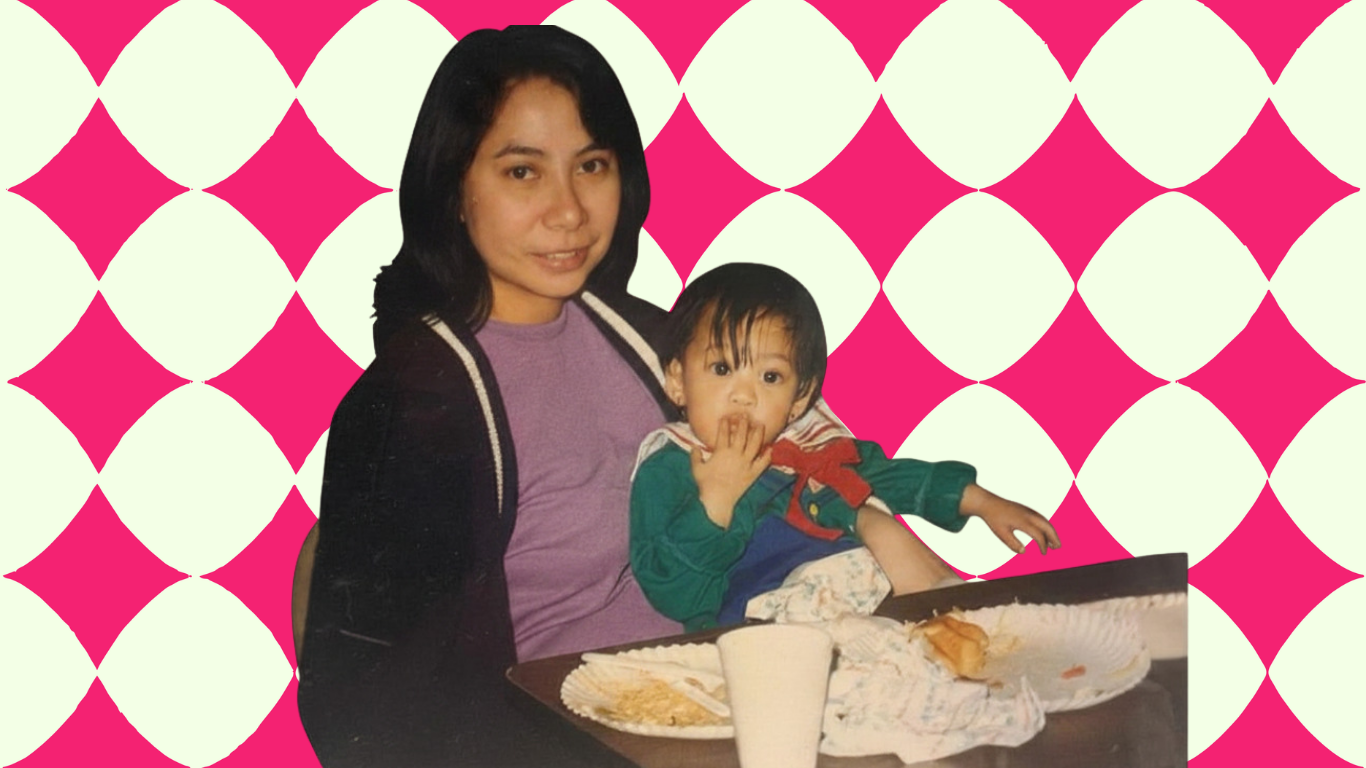
I grew up with, it's hard to explain in the U.S. culture, but I grew up with a nanny, but she was more than a nanny. She was like a second mom to me. My mom was busy working and she wouldn't come home — both my parents wouldn't come home until around 8 p.m., because they both worked in New York and the commute was long. Her name is Nanay, my second mom, and she made really good food, but something unique she made was a SPAM sushi. It's so bad for you, but it was so good. It was sushi rice with little SPAM sticks in it. I would eat it after school. And this was way before sushi was in grocery stores. I grew up in a very Korean community. I would say 80 percent of the people I went to school with are Korean, and they do put SPAM in their kimbap, so maybe she got the inspo from that?
Did your family have any other food traditions?
Some of my favorite memories growing up are going to Chinatown in New York with my family on Sundays. I know a lot of people in New Jersey did Sunday sauce, but what my family did was dim sum. The service was not that great. They were very rushed. And I have a lot of connection to those memories of eating fried squid and not knowing what it is, but craving it. I was telling my husband that at seven years old, I'd be like, ‘I want fried squid.’ I didn’t want chicken nuggets.
What's your most controversial food opinion?
It's very local to Michigan. There's this popular slider place called Bates’ Burgers. I think Detroit Free Press is running like a bracket for the best burgers in the area. I was talking to my friends yesterday, and I was like, ‘That is the worst burger ever. I'd rather get a McDonald's or a Burger King burger.’ I think there's a nostalgia thing to it, because it's like a cute little Coney Island kind of place, like a little diner that is very old school, but I don't think it's that good. There's a place in rural Michigan that's also on that list, and it's called Talley’s that is really good. The burgers are really good, so I want them to win.
Do you have a biggest restaurant pet peeve?
Maybe because I'm a parent, but a restaurant not having high chairs — that's really annoying. But I also understand that not all places are child-friendly. Also, having doors that don't fit a freaking stroller. That's just rude. Let me go into your bakery and not have to go up the stairs. You start noticing that it's not wheelchair accessible, and it affects other people.


