

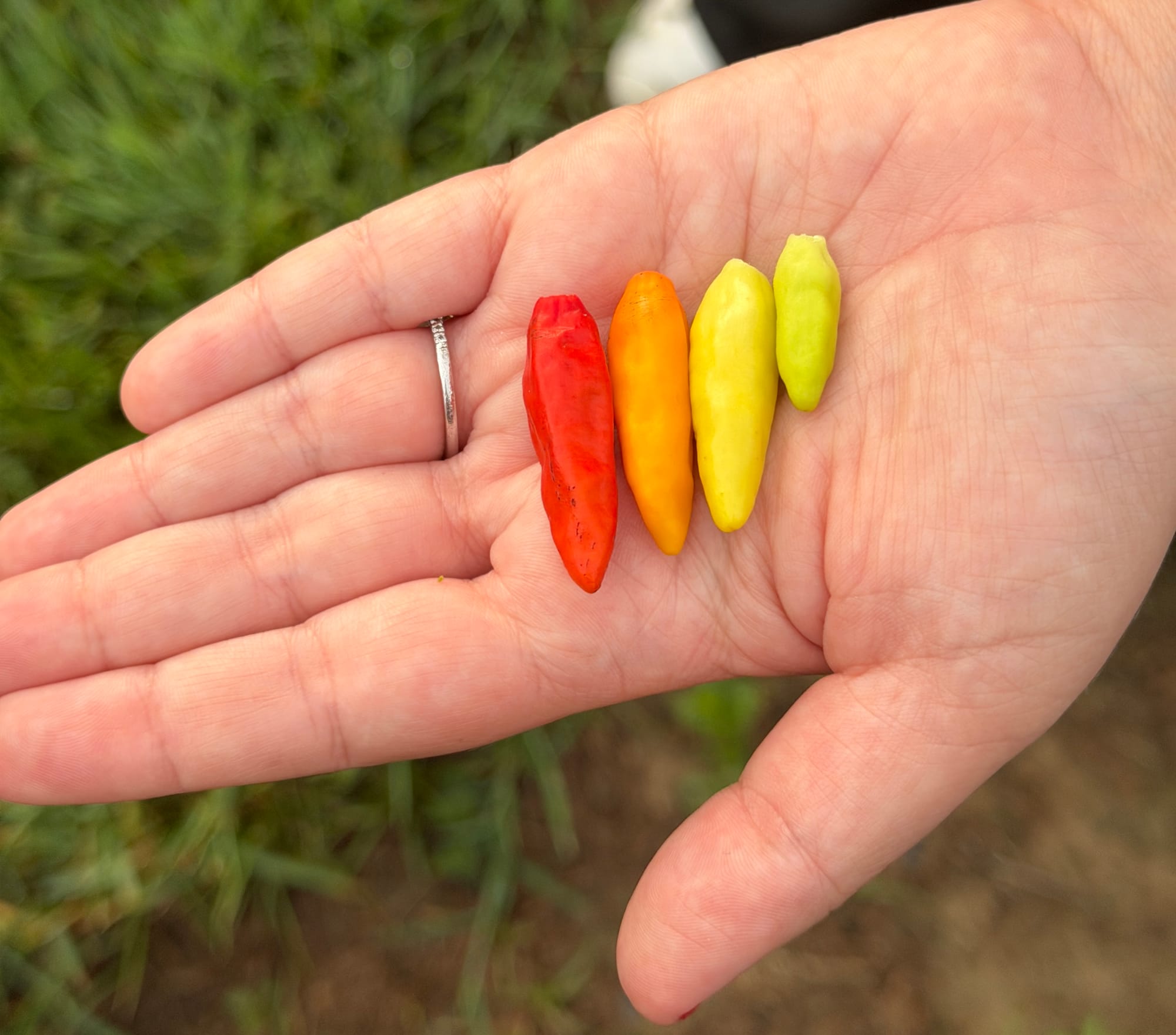
The pepper fields on Avery Island are thick with Louisiana’s notorious humidity, even at 6 in the morning on a Thursday in August. The sun is barely over the trees, and armed with bug spray and sunscreen, I’m walking among the rows of vividly colored peppers in different stages of ripeness — first pale yellow, then orange, then fiery red — as I pluck one of these prized chiles from a bush and prepare for a jolt.
Though most Americans have tried a dash or two of Tabasco, they’ve likely never eaten one of the chiles fresh, and that's exactly what I'm about to do. Every Tabasco pepper technically starts right here, from seeds grown on Avery Island, though many are now farmed in Africa and South America in an effort to diversify and protect against crop collapse. They're highly perishable, and must be pulverized into mash and stored in enormous plastic bladders within hours of being picked to preserve freshness. And from the first sniff of that little capsicum, I can tell that it's going to be much hotter than what actually ends up inside the bottle.
Perhaps sensing my hesitation to just haul off and take a bite, Christian Brown, Tabasco’s sales operations manager who's showing us around the fields, suggests I roll the tiny pepper between my fingers, gently dislodging the seeds and flavor from the interior membrane, then flip it over and dot a drop of its bright-red essence on the back of my hand. It’s weird to be slamming pure capsaicin this early in the day, but the flavor jolts me out of my sweaty drowsiness. It’s floral and bright, and at as high as 50,000 Scoville units per pepper, spicy as hell.
My tongue tingles, but I’m in much better shape than the Canadian fitness influencer who joined me in the fields, his mouth ablaze and guts churning after several video takes. It’s immediately clear how these chiles built an empire. With a little salt, time, and vinegar, that big floral heat is transformed into something special.
Immediately recognizable in its cologne-inspired bottle, Tabasco sauce is so commonplace that its physical presence almost fades into the background. I’ve seen it in Riviera Maya restaurants, served alongside freshly made salsas, and protruding from an ice bed holding locally-caught oysters in Belfast. It even thrives in the ranch-obsessed Midwest, which often looked down upon heat until the 1980s. I can’t speak for you, but Tabasco has been a ubiquitous presence throughout my entire life. I am sure there was a bottle of the sauce in the refrigerator of the Northwest Louisiana home that I came home from the hospital to, and there was certainly one on the kitchen table I ate at every night growing up. Even as someone who was born “north of I-10,” the interstate that spiritually separates North and South Louisiana, Tabasco’s always been there. I can immediately clock its spicy, snappy flavor in a dish, bringing brightness and spice in equal measure to my gumbo or fried chicken.
If I am eating it, I probably think it is better with a little bit of Tabasco on it. And the company insists that it is the most widely distributed hot sauce in the world, giving it a culinary influence that few other condiments can dream of. So when Tabasco asked if I’d like to come to Avery Island, about 130 miles west of New Orleans, to see how the secret sauce is made — literally — I jumped at the chance to better understand this most pervasive of ingredients. And to see how we got to a place where a Louisiana pepper sauce became a global phenomenon.
Tabasco can be a touchy topic among hot sauce enthusiasts, because McIlhenny did not invent hot sauces made with tabasco (lowercase) peppers.
With its trees draped in Spanish moss, its delicious accents, and yes, that notorious humidity, there is no place on earth like South Louisiana, what locals might call “Acadiana” or “Cajun country.” Avery Island — yes, the one from that Neutral Milk Hotel album — sits near the bottom of the state, a short drive away from New Iberia or Lafayette. It isn’t actually an island, though, but a natural salt dome that has served as the base of operations for the family-owned McIlhenny Company, which produces Tabasco’s classic red pepper sauce, as well as a slew of other spicy condiments added throughout the years, since the mid-1800s.
There are scant details about the man who started it all, though it seems that’s how the company likes it. In trying to hunt down details, it became clear that obfuscation has been highly effective in marketing Tabasco. But everyone can agree that the complicated story begins with Edmund McIlhenny, who invented Tabasco sauce in the mid-1800s. A Maryland native who found his way to Louisiana, it is said that McIlhenny did not even mention his invention in his own obituary, and did not believe it to be an important part of his legacy. The company is pretty thin on publicly sharing information about his life, and few photos of him exist, but its official story is that Edmund wanted his sauce to bring the spicy, flavorful foods that he ate in Louisiana to the entire Reconstruction South, which he said ate a “bland and monotonous diet.”
His son, Edmund Avery “E.A.” McIlhenny, would bring the company to even greater heights; He is credited both with major innovations in the production process and with introducing the characteristic green top that still crowns every one of the one-million-plus bottles of Tabasco that are produced on Avery Island every day. Whatever their intentions, Edmund McIlhenny and E.A. transformed peppers, vinegar, and salt into a global icon, that much we know for sure. But there’s a whole lot more in there that feels incredibly murky, with competing accounts offered by McIlhenny family members, historians, and hot sauce fans.
Tabasco can be a touchy topic among hot sauce enthusiasts, because McIlhenny did not invent hot sauces made with tabasco (lowercase) peppers. They’re native to the Tabasco, a southeast region of Mexico along the Gulf of Mexico, and part of the genus capsicum frutescens, similar to a Thai or bird’s eye chile used to make piri-piri chicken so fiery. There were plenty of people making vinegar-and-pepper sauces decades before McIlhenny tried his own hand at the craft, but McIlhenny’s experimentation came at a time when many moneyed and educated white men were becoming enticed by the bold chiles, spices, and other flavors they encountered in their colonialist adventures across Asia and Africa.
Most agree McIlhenny was given the pepper seeds by a friend in New Orleans and began developing the recipe for his sauce sometime in the 1860s. The company’s official origin story insists that he came up with the recipe on his own, while others believe that it was given to McIlhenny by a plantation owner named Maunsel White, who also made his own “tobasco” pepper sauce in the 1840s and 1850s.
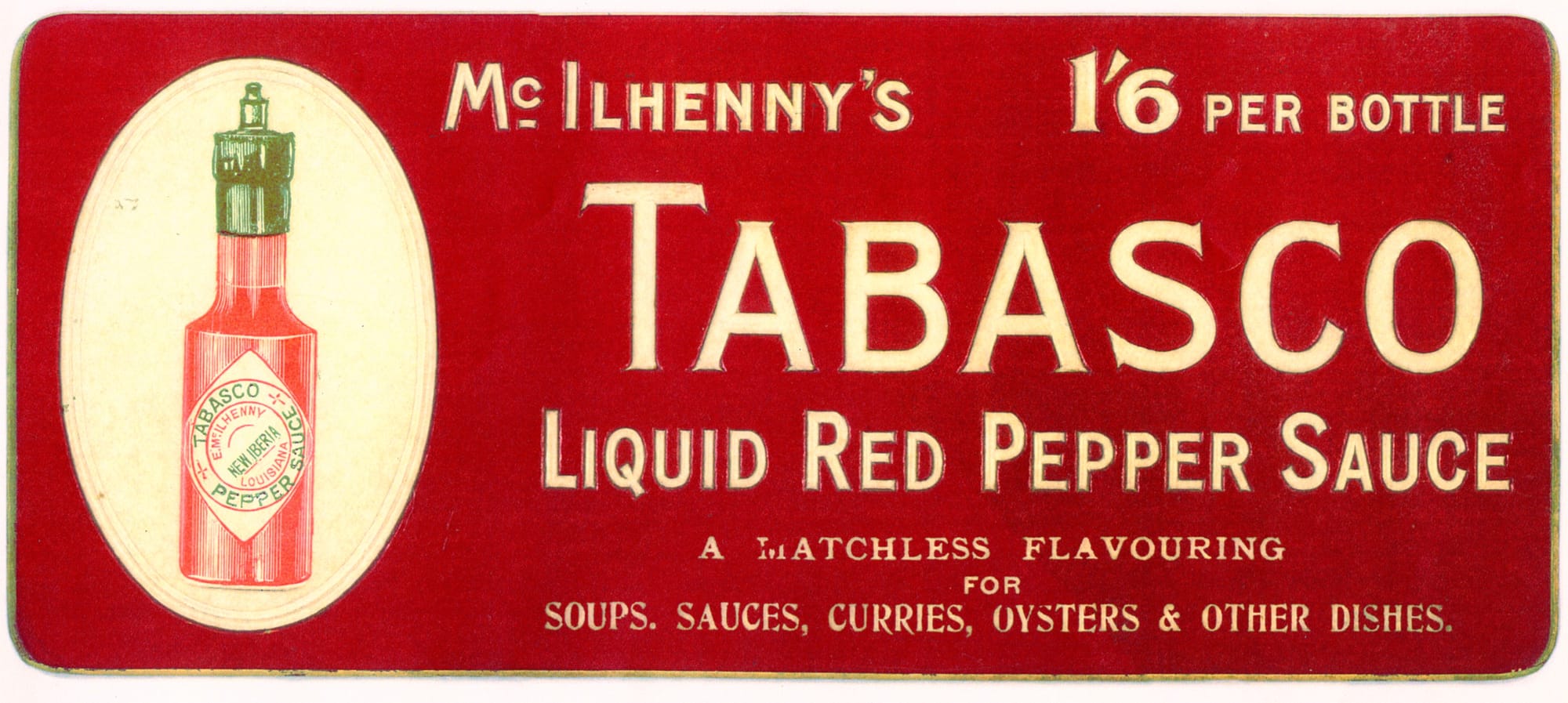
Regardless of who came up with the recipe first, McIlhenny's Tabasco sauce was in production by 1868, and it wasn’t long before it began to spread far beyond the great state of Louisiana. In 1872, the company hired a traveling salesman named John C. Henshaw to travel up and down the east coast touting Tabasco. Henshaw, a former Union soldier who served as the company’s first sales rep, peddled the sauce to restaurants and oyster houses in an effort to drum up demand. “This sauce is the special want of the poorer and more numerous classes, and a thorough canvassing of the oyster houses, saloons, restaurants, etc. by the party who has taken hold of it will, it is hoped, create such a general demand as to compel the grocers to apply for it,” Henshaw wrote to McIlhenny in 1872.
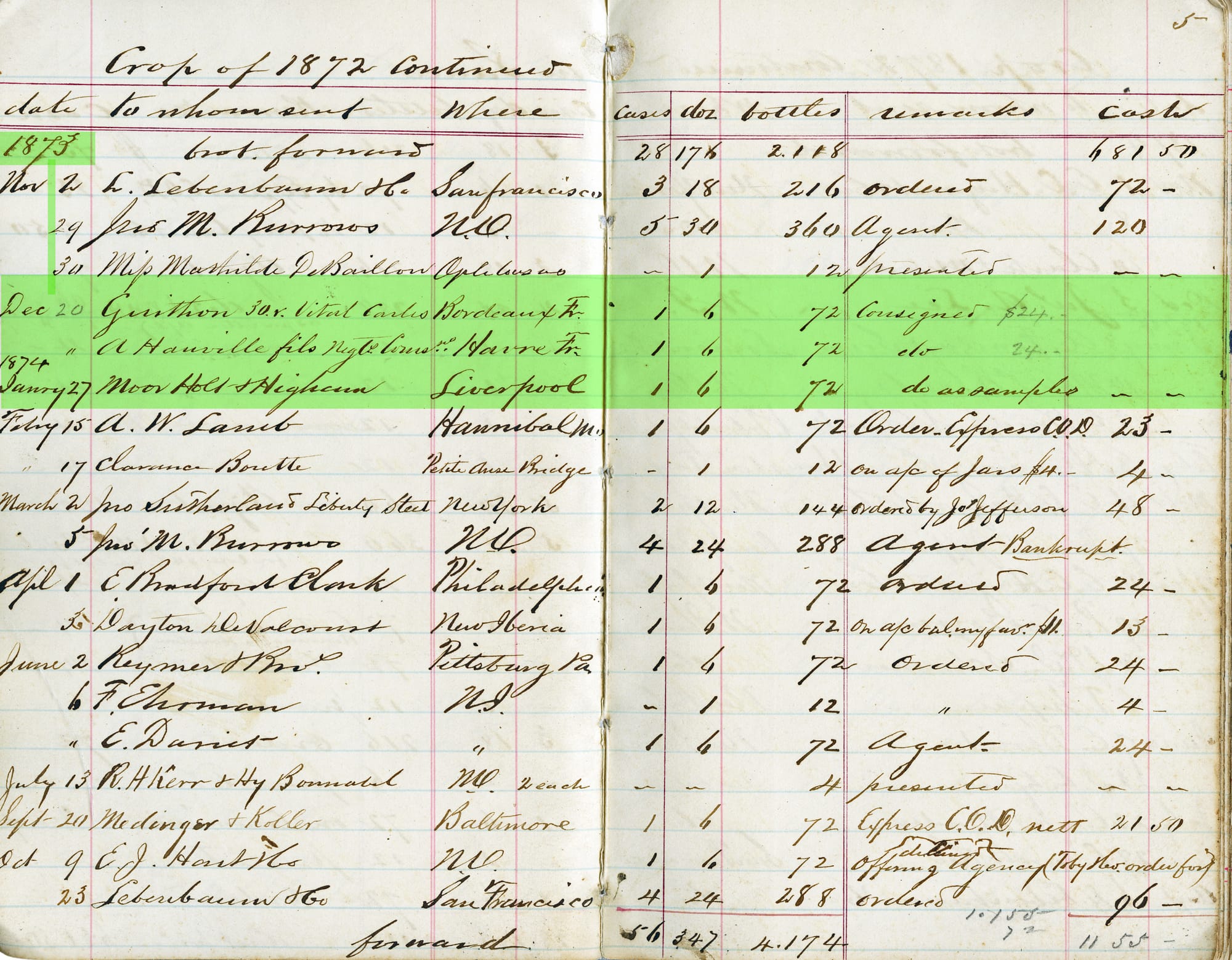
A ledger book uncovered by Tabasco historian and archivist Shane K. Bernard indicates that the company first began shipping the sauce overseas two years later, with exports to France and England.
Today, Tabasco sauce is made in largely the same way as it was back then, with the help of a number of mechanical innovations that make the process a bit easier. Peppers are crushed and mixed with salt to make a “mash,” which is aged in oak barrels repurposed from the production of whiskey. The sauce remains in those barrels for up to three years, concentrating in flavor as it ages. When the mash goes into the barrel, it’s bright and viciously spicy, taking over the front of my nose as I take a tiny bite. It mellows, darkens, and concentrates as it ages, the fermentation bringing distinct complexity and funk. From there, it’s mixed with vinegar and blended for two weeks to create the glossy, emulsified sauce before being decanted into bottles, packaged into boxes, and shipped all over the world.
There’s just something fun about believing that the guy who invented your favorite hot sauce was kind of a wacky tinkerer.
More than 150 years after it was invented on Avery Island, the mystery in Tabasco’s origin story feels intentional. It lends a unique mythology to the sauce, one that most bottled condiments just don’t have, and there’s just something fun about believing that the guy who invented your favorite hot sauce was kind of a wacky tinkerer, a man so invested in making your food taste better that he spent years fiddling with peppers and vinegar to create something that improves your dinner. There's romance in that, and romance sells!
But for decades, the hard work that went into building Tabasco into a global brand was downplayed, either by the company itself or in the press. When Barnard started at the company in 1993, he says that there were outright falsehoods in the company’s history that had made their way to print, though he wasn’t clear about who was responsible for those misconceptions. It was claimed that the sauce was such a success that it had to open up a London office to handle European trade by 1872. But as the ledgers he uncovered showed, the first bottles didn’t even hit Europe until two years after that.
“It wasn’t what you think of as an overnight success,” he says. “The short answer is that it really took a long time to develop the icon status that you see today.”
In Barnard’s research, Tabasco really became common in the United States around the 1890s. The company allowed a Northeastern businessman named Thomas Seabrook to travel the country performing The Burlesque Opera Tabasco, a humorous operatic stage show that made use of an enormous, 5-foot-tall papier-mache bottle of Tabasco, songs written about the sauce, and a pretty bonkers storyline that involves Morocco and a displaced Irishman tapped to cook spicy foods for the pasha, or lord, in order to distract him from a plot to overthrow him.
That opera traveled across the country, and at the end, the company provided tiny cork-topped bottles of Tabasco to give to showgoers after the performance. (Composed by G.W. Chadwick, the opera’s libretto was feared lost until 2012, when it was discovered by a New Orleans composer, who staged the show in 2018 with the company’s blessing.)
“By then, you can see that Tabasco had already become a household name, because otherwise, the opera wouldn’t have made sense to anyone,” Barnard says.
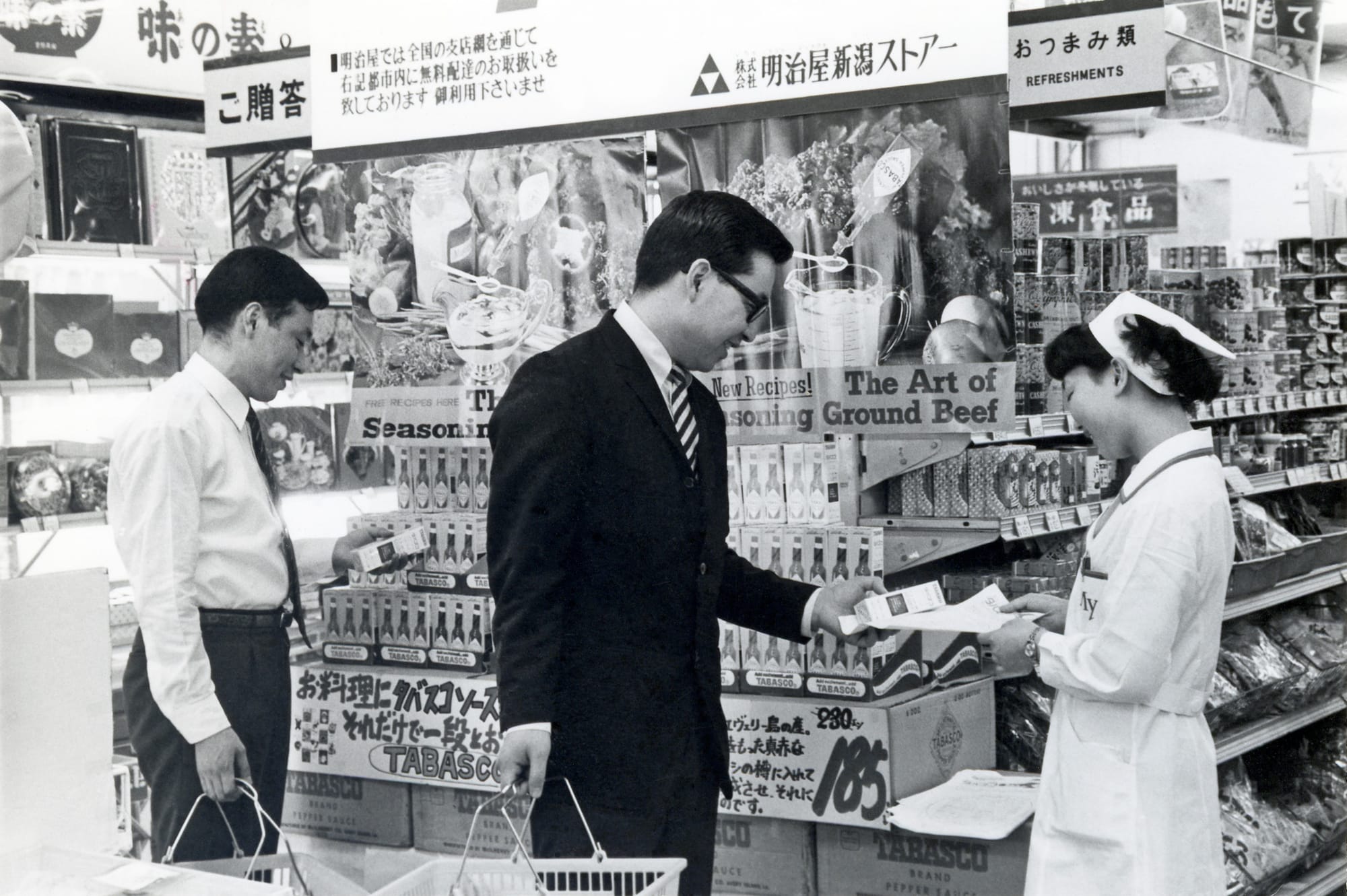
After World War II, Tabasco earned particular popularity in Japan, now the company's second-biggest market. It’s eaten mostly on Italian foods like pizza, and is the star of its very own dish: Spaghetti Napolitan. Also called "Naporitan," the dish involves boiled spaghetti noodles slathered in a ketchup-based sauce spiked with Tabasco. At the Tabasco Country Store on Avery Island, fans can purchase a ketchup that’s made with Tabasco and only sold on the island and in Japan. (Obviously I grabbed a bottle — it’s thick and sweet, with just a little bit of spice, perfect for dunking a french fry.)
Its popularity in Asia can also be attributed to the presence of American soldiers in the region, to some extent. In 1966, as the Vietnam War raged on, Tabasco sent tiny bottles of sauce and a recipe cookbook to GIs, offering tips to help them make their MREs (meals ready to eat) more palatable. The sauce officially became a part of MREs in the 1990s, and when they were removed in 2011, soldiers were so furious that the military ended up returning those tiny bottles to the meals as a matter of morale. (And because the former plastic pouch packaging they were using was discontinued. As always, there is no simple story involving Tabasco.)
The way that Tabasco made its way around the world, in the hands of enterprising salesmen and soldiers alike, is a remarkable business strategy. Instead of focusing on the grocery store shelves, where the vinegary, punchy sauce could not be tasted, bringing it directly to restaurants — and to the mouths of theatergoers — offered a distinct advantage in the opportunity to taste the product, creating a craving for that piquant heat in real time. Tabasco’s appeal to soldiers is equally shrewd, because what better way to create a loyal customer than making the terrible packaged meals they’re forced to eat every day taste a little bit better? Tabasco meets its customers where they are — and offers them the opportunity to have a better meal with just a few shakes of a bottle. The mystery is just the cherry on top.
In 1998, the company made a national splash at the Super Bowl with an ad that people still talk about today. In the 30-second spot, a man can be seen eating pizza on a swampy Louisiana porch, dashing each bite with Tabasco. A mosquito buzzes by, lands on the man’s knee, and bites him before flying away and exploding into a ball of flames after consuming all that heat. What is particularly interesting about this cheeky ad is that it began as a local commercial that ran in Louisiana before it became a national phenomenon, much like the hot sauce itself.
In 2026, Tabasco does its own storytelling right on Avery Island. The company welcomes thousands of visitors every year, who line up for tours of the bottling facility and pay $10 for the chance to taste “Tabasco mash,” the fermented, mashed peppers that have been aged in oak barrels for three years, at the Tabasco Country Store gift shop. Inside, there are T-shirts, keychains, home decor, and more varieties of Tabasco sauce than I have ever seen — a raspberry-chipotle sauce, a dangerous looking scorpion pepper offering, and Tabasco Family Reserve, a version of the original that’s given a bourgeois upgrade with white wine vinegar and up to six years of aging time.
At a small soda fountain counter in the back, an employee slings Tabasco-spiked ice cream and Coca-Cola infused with the sauce. This felt a little bit like their take on a TikTok trend, an offering that’s got just enough shock value that you’ll want to give it a try, if only for the ‘gram. Imagine my surprise when the ice cream was good, the raspberry-chipotle heat mellowed nicely by the vanilla soft-serve. (The Coke was much less enticing, each sip tasted like it was absolutely going to give me heartburn later.)
There is also a restaurant right next door to the Country Store, which makes sense considering the company’s beginnings in those working-class oyster houses. Here, tourists can dash the Tabasco sauce of their choosing onto plates of crab-cake-topped crawfish etouffee, po’ boys, and some of the best fried pickles I’ve ever eaten. It’s a perfectly fine tourist trap dining establishment, decidedly less bland than most, and yet another opportunity to get their product in your mouth. If you want people to buy a whole lot of hot sauce, you’ve got to give them something to put it on.
Back in the factory, I was struck by the demonstrable pride that the company has in its product. McIlhenny boasts that Tabasco is sold in 195 countries, its packaging translated into more than three dozen languages. At the company’s Avery Island production facility, the bottled sauce is placed into boxes specifically designed for their destination. As a company official leads us around the warehouse, he points to a large whiteboard with a long list of countries written on it with a series of tally marks next to their names — a visual representation of how many orders to that country the employees have packed. This is a particular point of pride for John Simmons, a McIlhenny family relative and the company’s director of agriculture, a nod to its ubiquitous global presence as he shows us around the facility.
But even now that Tabasco is routinely dashed on everything from pizza to pad Thai, that global growth has, in some ways, made it less intrinsically linked to Louisiana cuisine. It is still made in the state, and employs hundreds of people there, but its identity has far outgrown its beginnings on that salt dome in Iberia Parish. That’s partly because of the homegrown hot sauce industry it spawned there, with fierce competition from Crystal, made with aged cayennes about two hours away in Reserve, Louisiana Hot Sauce, and the vinegary pepper sauces many folks in the state make at home. In Louisiana, there's plenty of heat to go around.
In reporting this story, I reached out to a handful of major Louisiana chefs, all of whom declined to speak with me about Tabasco. One said she just never used the stuff — her mom cooked with Louisiana Hot Sauce, so that’s what she liked best. Another only used their own housemade hot sauces in their restaurants, but spoke effusively about the company’s treatment of its workers, how it allows Tabasco employees to live on Avery Island at discounted rates, and marveled at its global presence. It seems to have become a messenger to outsiders, carrying a tiny piece of Louisiana culture across the world instead of playing a dominant role in the state’s cuisine.
For the first time, though, Tabasco’s reign as the world’s most ubiquitous hot sauce could legitimately be threatened. The last 10 years or so have brought major change to the industry, thanks in part to a chile arms race in which growers competed to create the world’s hottest peppers. Research indicates that spicy food is more popular than ever — and that means there’s more competition than ever for Tabasco on the supermarket shelf.
Back in the factory, I was struck by the demonstrable pride that the company has in its product. McIlhenny boasts that Tabasco is sold in 195 countries, its packaging translated into more than three dozen languages.
Hot Ones, the Complex video series in which celebrities eat chicken wings dressed with increasingly spicy sauces while being interviewed, has played no small role in this shift, offering a platform for a new generation of craft-made, small-batch hot sauces that many enthusiasts believe to be superior to big brands like Tabasco or Cholula because they’re spicier or boast more varied flavors. But then there’s Beyonce’s 2016 smash “Formation,” which made clear that the Queen keeps a bottle of hot sauce in her bag, a reminder of the ways that sauces like Tabasco have helped people ensure that their food is properly seasoned for generations. The newcomers might do well to understand Tabasco’s role in paving the way for their success, and for the mainstream American appetite for other spicy condiments, like the now-ubiquitous Lao Gan Ma chili crisp and sriracha.
Because the McIlhenny Company is privately held, it’s unclear whether or not this new crop of hot sauces has impacted revenue. To its credit, McIlhenny has not refused to keep up with the times. The company continues to evolve, broadening its flavor profiles and taking influence from cuisines rooted in places far beyond Louisiana. Its newest sauce, Salsa Picante, is a Tex-Mex inspired sauce intended to be slathered on tacos and chilaquiles. It has also moved well beyond hot sauce, infusing its signature flavor profile into barbecue sauces, and jellies, even Absolut vodka. There’s Tabasco-branded clothing, a lip gloss line at Sephora, and in-person collabs with restaurants like Boston’s Saltie Girl, a modern echo of its oyster house origins.
In 2026, Tabasco also hired its first CEO from outside the family, who’s been open about his desire to grow the brand even further, a concept that seems kind of wild when you consider how many places it’s already been. As it evolves, it’s hard not to wonder whether or not people who encounter a Tabasco-branded pepper jelly or bottle of vodka will even understand the history built into the flavor, or if they even care. As it gets further away from those iconic green-top bottles and more into making sriracha and Salsa Picante and whatever else comes next, it’s hard to say whether or not that shift actually makes more sense. Do we really need Tabasco’s take on gochujang, or can we just leave it up to the Korean chile paste makers who’ve been doing their own fermenting and bottling for over 100 years?
Whatever comes next for Tabasco, it can certainly be regarded as the hot sauce that conquered the world. Its success is in its ubiquity — and its recognizability. It’s always there for you, it’s old-reliable, available whenever your takeout meal on vacation sucks or you need a dash of heat to feel alive. And what is perhaps most unsaid of all, though, is that in a sea of spicy rivals Tabasco is still delicious, and it’s not hard to sell a whole lot of something that’s really great.
Editor’s Note: Some reporting on this piece was done on a press trip, paid for by the company. Ravenous maintains its editorial independence and does not allow subjects to influence our reporting. For more, refer to our ethics policy.
Ravenous can only be as spicy as our readers allow. We rely on paid subscriptions so we can report what other food media ignores. Subscribe today.


