

Four years ago, the premiere of a little TV show called The Bear left a few Chicagoans upset. Show creator Christopher Storer grew up outside of Chicago, but his depiction of the city didn’t sync up with the real-life experiences of many locals. Some of the criticism from Season 1 rang true: Local restaurants didn’t get enough spotlight, and Black and brown characters needed more to do. After an interview in 2022, Carmy himself, Jeremy Allen White, even asked me how locals were responding to the show.
Chicago is easier to experience than to explain to outsiders — and that includes the natives who have departed to go elsewhere. Often, the narrative surrounding the city is described as a tale of two Chicagos, segregated by race and class and divided by North and South sides. The truth is that more than two narratives exist, and Storer’s perspective, while a bit dated, is as valid as anyone else’s, even if you don’t agree with it.
Over the last week, two stories involving Chicago restaurants beautifully exemplified this ugly divide.
Earlier this month, the Illinois Restaurant Association and its allies failed in their efforts to reinstate the tipped minimum wage. The tipped minimum wage is more or less a tax credit that restaurants can use to pay workers. At $12.62 in Chicago, it’s lower than the city-mandated minimum wage of $16.60, with the assumption that tips from customers will make up the difference. If a restaurant or bar has a slow night and tips don’t cover that gap, the employer is required to pay the difference.
Led by Chicago Mayor Brandon Johnson and his progressive caucus, the City Council voted in July 2024 to eliminate the tipped minimum wage in phases, in order to give restaurants time to adjust to increased labor costs. The measure also granted tipped workers 8% annual increases over the next three years. But the issue continued to burn, and last year, efforts to reverse that measure intensified and culminated with a Johnson veto, which means the tipped minimum wage will continue to be phased out until its elimination on July 1, 2028.
The progressive activists at One Fair Wage have led several national campaigns focused on eliminating the tipped minimum wage. Many members were also part of the Fight for $15 coalition that focused on increasing the federal minimum wage, an effort that put pressure on fast-food restaurants across the country. One Fair Wage’s basic argument is that no one can afford anything anymore; the cost of living is skyrocketing, and people need a higher wage to live. Opposition to this movement comes, for the most part, from the National Restaurant Association. With increased costs, the advocacy group wants to save its members, made up of restaurant owners, as much money as possible in a world where customers are dining out less. The National Restaurant Association was successful in Washington, D.C., where the D.C. Council approved a measure last summer that slowed the elimination of the tipped wage. Similar tactics, including editorials in legacy newspapers, didn’t bring the same results in Chicago.
Already frustrated with the economy and worried about the futures of their businesses, some Chicago restaurant owners have lashed out at their mayor. A story posted on Fox News threw more kerosene on the fire thanks to a headline tailor-made for depravity: “Chicago mayor links restaurant industry to ‘slavery’ as tipped wage fight intensifies.” C. Montgomery Burns would have been proud of subsequent reactions as a glut of local chefs and restaurant owners took to social media to call Johnson “tone deaf” and “out of touch.” A rep for the mayor did not return Ravenous’s requests for comment.
Johnson’s words are hardly shocking, as they’ve been a major talking point for One Fair Wage for years. The New York Times published a letter to the editor in 2021 by civil rights scholar Michelle Alexander that detailed how tipped workers were mostly Black and Latine. In that letter, Alexander also praised Forked: A New Standard for American Dining, a book published in 2016 that dives into the history of tipping. The book’s author? One Fair Wage founder Saru Jayaraman.
The National Restaurant Association does not represent all restaurant owners. One owner, who didn’t want to be named, talked to Ravenous about the importance of lifting up the employees, who are the hardest-working people in the industry. However, restaurant owners aligned with the restaurant association say their servers aren’t poor. The Chicago Tribune’s editorial board summarizes the organization’s view, writing, “servers and bartenders generally make far more than the $16.60 hourly minimum that all other Chicago workers must receive.” The notion that businesses aren’t taking care of their workers is outdated, it argues.
Another point of contention is that the policy doesn’t take into account different business models. How a restaurant copes with increased costs depends on its individual model, and counter service restaurants are different from sit-down restaurants. Some of those restaurants may be implementing a service charge. Fine dining restaurants, and especially the ones with pricy tasting menus, won’t be impacted much. Those restaurants tend to have customers with deeper pockets.
The confrontations between the restaurant association and One Fair Wage have been cinematic, if not a bit choreographed. The twisted political machinery reminds me of the special effects wizardry from a summer blockbuster; in both cases, workers are undervalued and underappreciated. Nevertheless, be prepared to go through this annually.
A New Alinea is Now Available
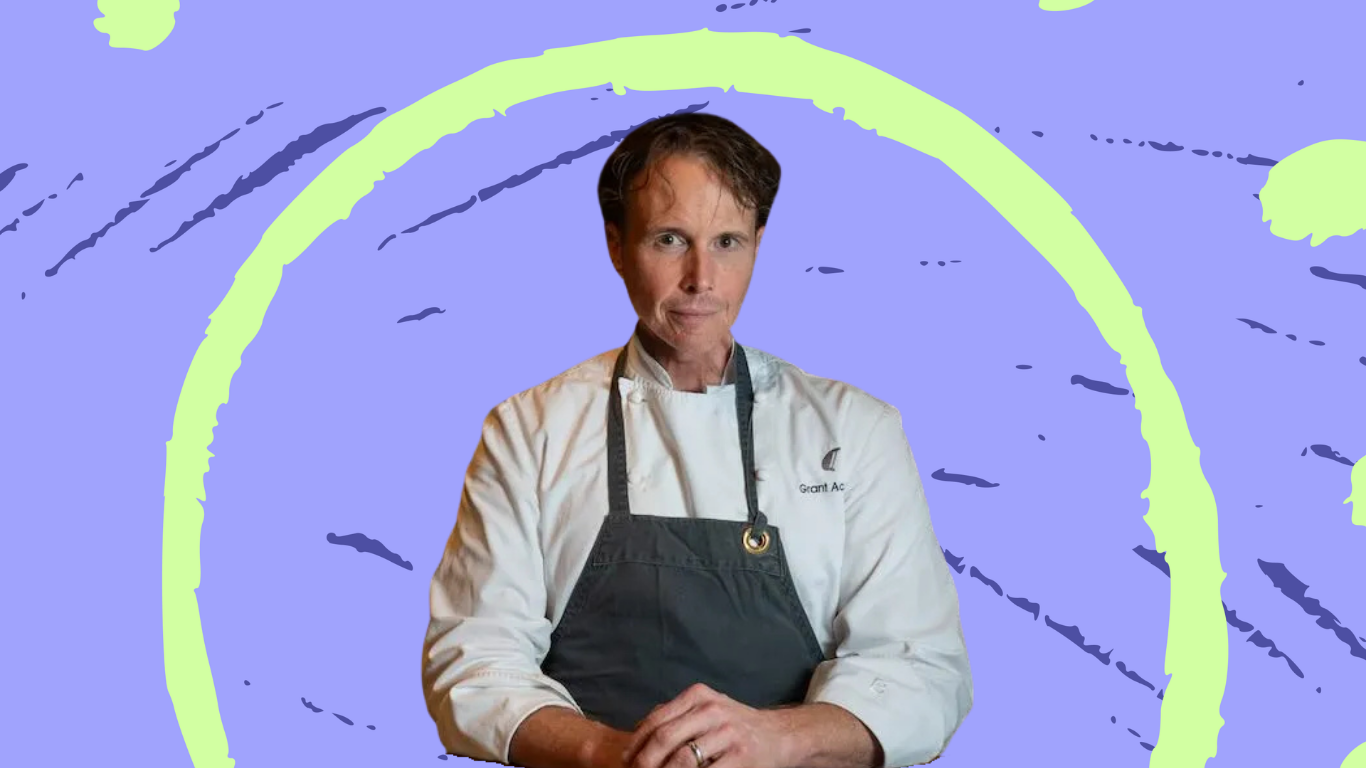
On Thursday, the chef of (now) two-Michelin-starred Alinea revealed he’s part of the growing number of chefs and restaurants using Substack. And while the Alinea Group felt it was the ideal promotional dais, not everyone is in love with the platform. The news isn’t that the chef is launching a subscriber drive and is soliciting donations. It’s that after a challenging year for Alinea, during which Michelin demoted the formerly three-starred institution to two-star status, and when the New York Times questioned if chef Grant Achatz and company had lost some of the velocity off its fastball, Achatz announced in a 2,700-word post that includes references to Radiohead and Ruth Reichl that there was room to evolve.
This isn’t as drastic a change as 2016’s reinvention, when crews gutted the space and rebuilt the restaurant. Achatz likens it to more of “a new body of work from the same artist.” Achatz writes that while Alinea’s international barnstorming tour in 2025 may have hurt the Chicago restaurant, he used the tour to workshop new ideas that the restaurant began implementing in January. Diners will find “all-new dishes, all-new serviceware, a deepened sense of theater in the Gallery and Kitchen Table spaces.”
🐦⬛ Bird Droppings
In non-related-but-related news, details about “a two-episode immersive audio romance” called Yes, Chef went public last week. According to The Hollywood Reporter, Yes, Chef centers on the “seasoned executive chef of North & Vine, a restaurant fighting to maintain its Michelin star in an industry that’s rapidly evolving. After a viral negative review threatens the restaurant’s legacy, Grant’s business partner brings in rising culinary star Iris Adams to shake things up and take North & Vine from ‘classic’ to ‘relevant.’”
Shawn Hatosy, star of The Pitt, plays a chef named Grant Reilly. Part of that backstory — we’re talking about the challenge in maintaining a star and what happens when a restaurant loses one — brings a ring of familiarity for those familiar with the aforementioned Chicago chef with the same first name. The two episodes have already been released via Quinn.
Meanwhile...
- Check it out: The Smitten Kitchen is… smitten.
- The five of us at Ravenous are all fans of print zines; I yearn for the days of Maximum Rocknroll and Punk Planet. Zines inspired our visual design. So it’s an honor that one of the best digital zines mentioned our young enterprise. Thanks for the love, Cake Zine.
- New City gives Ravenous and fellow worker-owned food pub, Gourmet, a shout-out.
- Friend of Ravenous, the Chicago-based writer Elias Cepeda, wrote some very nice words about our little publication.
- While we haven’t branched out to the West Coast, that didn’t stop LA Food Podcast from talking Ravenous in a greater exchange about the future of food media (the conversation starts around the 20-minute mark). Co-host Luca Servodio compares Ravenous to the “Defund the Police” movement, saying both have failed at sharing concrete solutions to the problems they mean to confront. When it comes to food media, some shared concerns include confronting AI slop, unethical influencers, and editorial compromises due to investor pressures. Servodio adds that he wants proof of concept before committing to a Ravenous subscription.
And with that note, we hope you enjoyed this free preview of our newsletter. Know that our month-long subscriber drive ends in May when Ravenous will officially launch. Tell a friend or enemy.

Ravenous is in the middle of a subscription drive to support our launch, and we need your support. We want a place for the stories that really matter — the kind of stories that affect change in the hospitality industry and everything it touches, alongside fun and informative pieces for our readers.
If that sounds like the kind of journalism you're interested in, subscribe and join us. Click below to redeem a 10% discount and get exclusive access to our newsletter.


